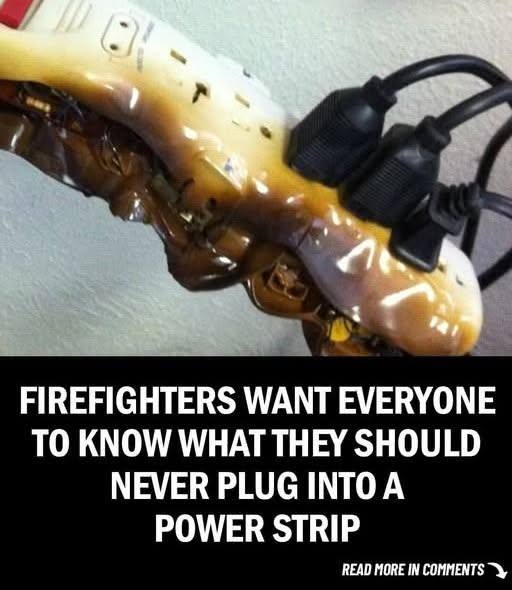
Power strips are convenient, but they are not designed to handle every type of appliance. Plugging high-power devices into a power strip can overload it, overheat the wiring, and create a fire risk.
Things you should avoid plugging into a power strip:
- Space heaters
- They draw a lot of electricity and are a common cause of power-strip overheating.
- Air conditioners or portable heaters
- High-wattage appliances should usually be plugged directly into a wall outlet.
- Refrigerators and freezers
- Their compressors can create high power demands when starting up.
- Microwaves
- They often use too much power for a typical power strip.
- Toasters and toaster ovens
- Heating elements require high current and can overload a strip.
- Coffee makers and electric kettles
- These heating appliances can exceed many power strips’ ratings.
- Hair dryers and curling irons
- They draw significant power and are better connected directly to a wall outlet.
- Washing machines and dryers
- Large appliances should have dedicated outlets.
- Power tools
- Drills, saws, and similar tools may create high electrical loads.
- Another power strip (“daisy chaining”)
- Connecting multiple strips together increases the risk of overload.
Safer power strip habits:
✅ Check the power strip’s maximum wattage/amp rating
✅ Use a strip with overload protection and surge protection when appropriate
✅ Replace strips that are cracked, warm, melted, or damaged
✅ Keep them away from water and avoid covering them with rugs or furniture
For low-power electronics like phone chargers, laptops, TVs, and gaming consoles, a properly rated power strip is usually appropriate.