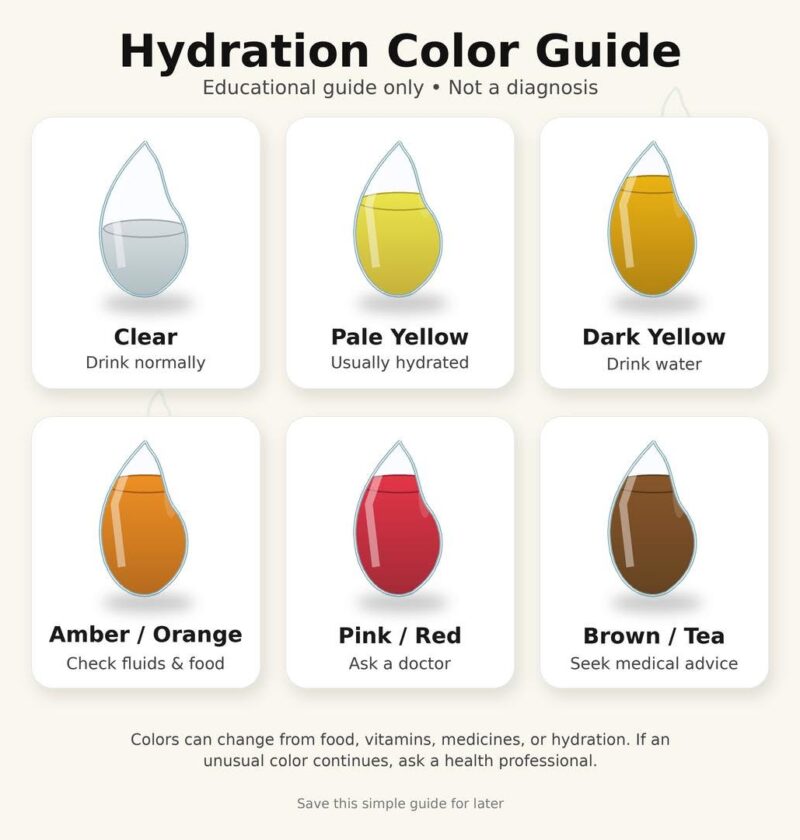
💧 Pale straw / light yellow (ideal)
Usually indicates:
- Well-hydrated body
- Normal kidney function
This is generally the “healthy target” color.
💛 Transparent / almost clear
May mean:
- You’re drinking a lot of water
- Possible overhydration (if extreme and constant)
Occasional clear urine is fine, but persistently clear + frequent urination can sometimes dilute electrolytes.
🌕 Dark yellow / amber
Common causes:
- Dehydration (most common)
- Morning urine (naturally more concentrated)
- Vitamin supplements (especially B-complex)
Usually improves with more fluids.
🍯 Honey / orange
Possible causes:
- Dehydration
- Certain medications (e.g., some laxatives, antibiotics)
- Liver or bile issues (if persistent)
If it stays orange despite good hydration, it’s worth checking.
🧡 Bright orange
May suggest:
- Strong dehydration
- Certain medications (e.g., rifampin, phenazopyridine)
- Rarely liver or bile duct problems
If persistent, especially with pale stools or fatigue → get checked.
🌈 Pink / red
Possible causes:
- Blood in urine (UTI, kidney stones, inflammation)
- Foods (beets, berries)
- Exercise-related muscle breakdown (rare)
⚠️ If not clearly food-related, this should be evaluated.
🟣 Dark brown / cola-colored
May indicate:
- Severe dehydration
- Liver disease (bilirubin in urine)
- Muscle breakdown (rare but serious)
Persistent brown urine is a red flag.
🟢 Blue or green (rare)
Usually caused by:
- Certain medications or dyes
- Rare infections (some bacteria)
Typically not dangerous if medication-related.
⚪ Cloudy urine
Possible causes:
- UTI (especially if burning or smell present)
- Dehydration
- Phosphates or crystals (sometimes harmless)
⚠️ When to pay attention
See a healthcare provider if you notice:
- Blood (red/pink) not explained by food
- Brown/cola color persisting
- Pain, burning, fever, or foul smell
- Sudden change lasting more than 1–2 days
🧠 Simple rule of thumb
- Light yellow = good
- Dark yellow = drink water
- Red/brown/orange (persistent) = investigate
If you want, I can also give you a hydration checklist based on urine + thirst + fatigue + headache signs so you can judge dehydration more accurately than color alone.