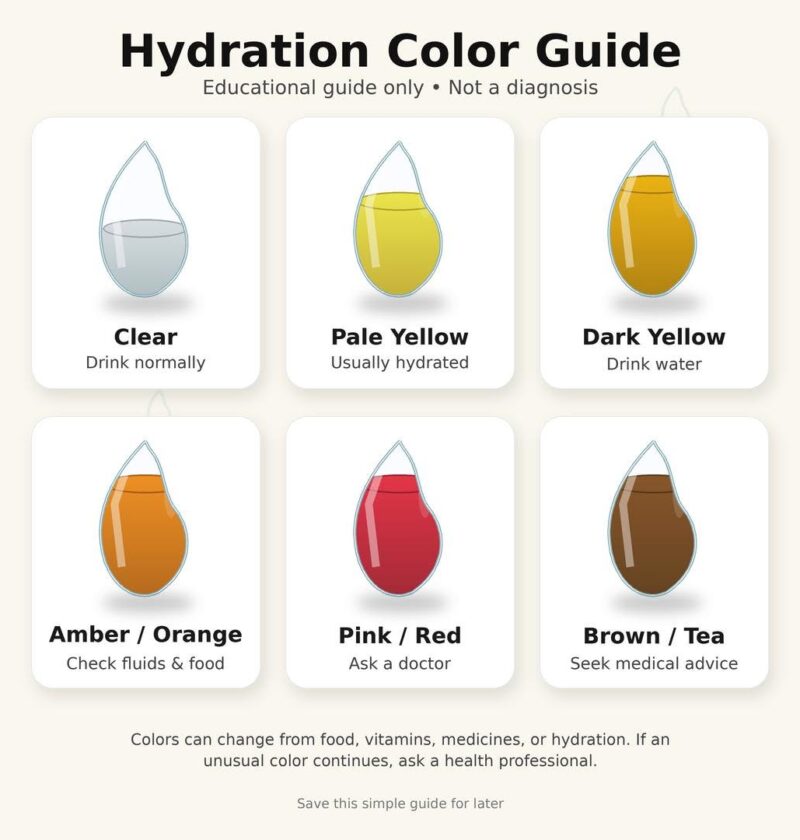
Here’s a simple, medically accurate urine color guide based on what different shades may indicate. Most changes are harmless and related to hydration, but some can signal health issues.
Urine color is mainly affected by hydration, diet, medications, and sometimes disease.
💧 🟡 Pale yellow (normal/ideal)
- Best sign of good hydration
- Kidneys are working normally
- No concern
💛 Dark yellow (mild dehydration)
- Most common cause: not drinking enough water
- Urine is more concentrated
- Fix: increase water intake
🟠 Amber or honey-colored
- More significant dehydration
- Can also happen after sweating, heat, or illness
- If persistent: increase fluids and monitor
🟤 Dark brown or tea-colored
Possible causes:
- Severe dehydration
- Liver issues (bilirubin in urine)
- Muscle breakdown (rare but serious)
🚩 If not from dehydration, needs medical attention
🔴 Pink or red
Possible causes:
- Blood in urine (infection, kidney stones, etc.)
- Certain foods (beets, berries)
- Some medications
🚩 If not food-related, get checked
🟢 Blue or green (rare)
Possible causes:
- Certain medications or dyes
- Rare bacterial infections
- Food coloring
Usually not dangerous, but unusual
⚪ Cloudy or milky
Possible causes:
- Urinary tract infection (UTI)
- High phosphate levels
- Dehydration or diet changes
⚠️ When to see a doctor
Seek medical advice if urine color change comes with:
- Pain or burning while urinating
- Fever
- Strong odor lasting days
- Blood (red/pink) not related to food
- Persistent dark brown urine