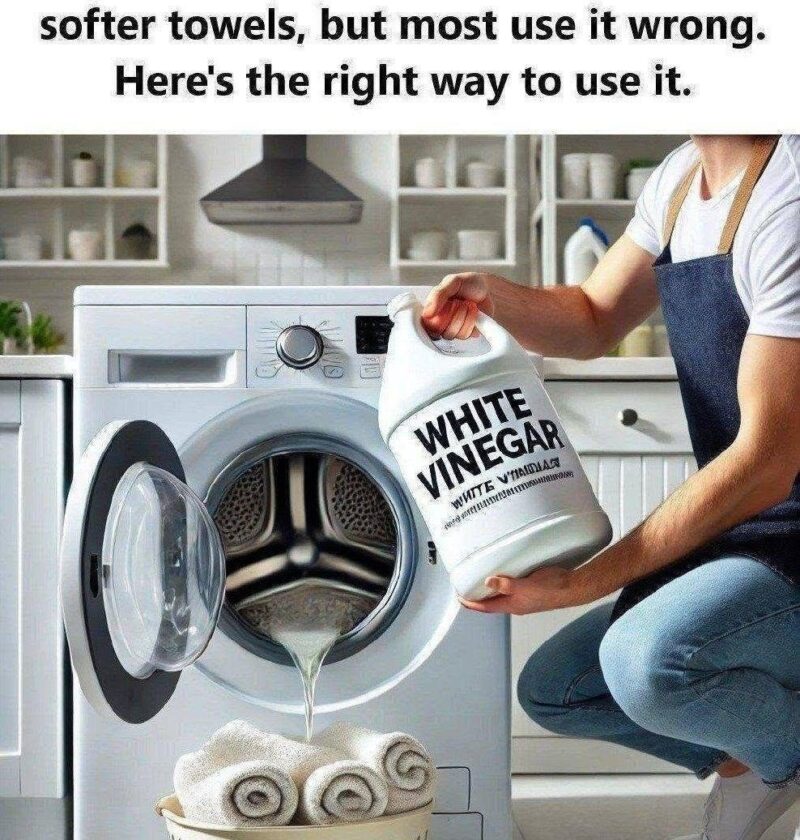
That headline is another “viral laundry hack” style claim, but there is a real, limited truth behind it: vinegar can help with odor removal and mineral buildup—but it’s not a miracle whitening agent, and it must be used correctly.
What vinegar actually does in laundry
White vinegar (acetic acid) can:
- Break down detergent residue
- Soften fabrics slightly (by removing buildup)
- Reduce musty smells
- Help with hard-water mineral deposits
But it does not truly “whiten” fabric like bleach—it mainly restores brightness by cleaning residue.
The correct way to use vinegar
1) As a fabric softener (best use)
- Add ½ cup white vinegar to the fabric softener compartment
- Works during rinse cycle only
This helps towels feel softer by removing detergent buildup.
2) For odor removal
- Add ½–1 cup vinegar directly into the wash drum
- Use for smelly towels, gym clothes, or mildew odors
3) For deep cleaning towels (occasional)
- Run a hot cycle with vinegar only (no detergent)
- Then run a second cycle with normal detergent
This prevents lingering vinegar smell and fully cleans buildup.
Common mistakes people make
❌ Mixing vinegar with bleach
- Dangerous gas reaction (chlorine gas risk)
❌ Using too much vinegar too often
- Can weaken rubber seals in some machines over time
- May reduce towel absorbency if overused
❌ Expecting it to replace detergent
- Vinegar does not remove oils or heavy dirt effectively
Does it really make whites whiter?
- Slight improvement if dullness is from detergent buildup or hard water
- No effect on stains like coffee, dye, or sweat marks (those need stain treatment or bleach alternatives)
Bottom line
Vinegar is useful as a laundry booster, especially for softness and odor control—but the “secret whitening hack” claim is exaggerated. It works best as a support tool, not a replacement for detergent or bleach.
If you want, I can give you a safe “whites restoration” routine using common household items that actually works better than vinegar alone.