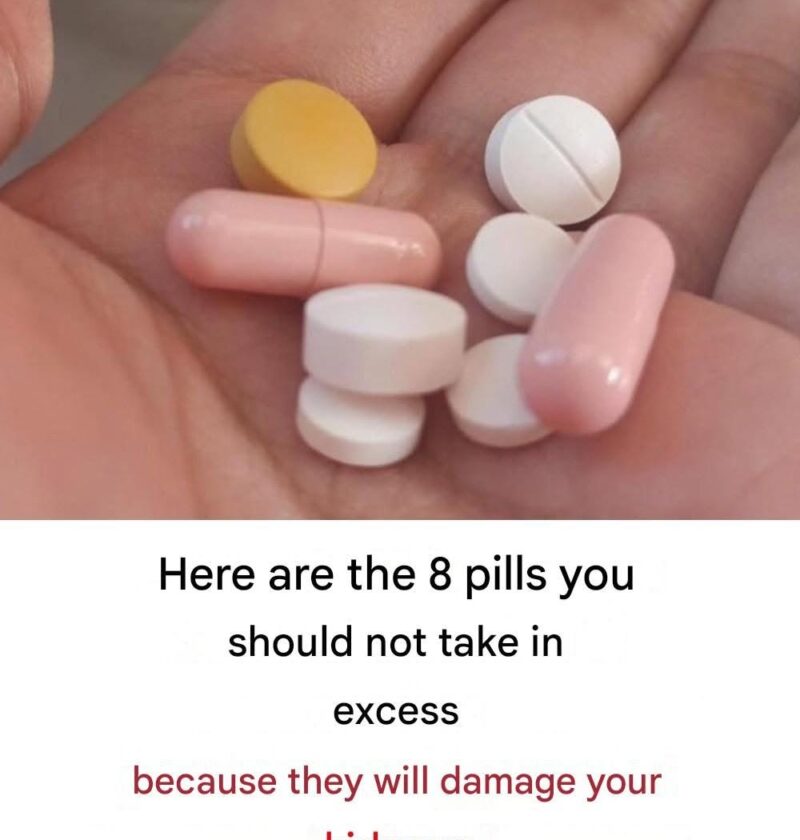
The idea that there are “eight pills you should never take because they damage your kidneys” is an oversimplification. There is no fixed list of universally dangerous pills. Kidney risk depends on dose, duration, hydration, age, existing kidney disease, and drug combinations.
That said, there are certain medicines known to potentially stress or injure the kidneys in some situations. Doctors use them all the time—but with caution.
Here are the main categories people are usually talking about:
1) Painkillers (NSAIDs)
Examples: ibuprofen, diclofenac, naproxen
Ibuprofen, Diclofenac, Naproxen
These are one of the most common causes of preventable kidney strain, especially when:
- taken in high doses
- used daily for long periods
- combined with dehydration or diuretics
Short-term use in healthy people is usually safe.
2) Certain antibiotics
Examples: gentamicin, vancomycin
These can affect kidney function if:
- blood levels get too high
- used in hospital for serious infections
- not monitored properly
Doctors often check kidney function during treatment.
3) Blood pressure medicines (in specific situations)
Examples: ACE inhibitors and ARBs
Lisinopril, Losartan
These are protective for kidneys long-term, especially in diabetes, but can:
- temporarily change kidney filtration when starting
- become risky during dehydration or severe illness
They are not “bad for kidneys” overall.
4) Diuretics (“water pills”)
Example: furosemide
Furosemide
Can strain kidneys indirectly if they cause:
- dehydration
- low blood pressure
- electrolyte imbalance
Used carefully in heart, liver, or kidney disease.
5) Heart failure / rhythm medication (rare kidney effects)
Example: digoxin
Digoxin
Not directly toxic to kidneys, but kidney function affects how the drug is cleared—so toxicity risk rises if kidneys are weak.
6) Acid-reducing drugs (long-term use concerns)
Examples: omeprazole, pantoprazole
Omeprazole
Long-term use has been linked (rarely) with:
- interstitial nephritis (kidney inflammation)
Risk is low but recognized in studies.
7) Lithium (psychiatric medication)
Lithium
One of the few drugs that can affect kidneys with long-term use, especially if levels are not monitored.
8) IV contrast dye (not a pill, but commonly included in viral lists)
Used in CT scans and angiography
Can temporarily reduce kidney function in high-risk patients, especially those with:
- pre-existing kidney disease
- diabetes
- dehydration
The important reality check
These medicines are not “forbidden” or automatically harmful. In most cases:
- they are safe when prescribed correctly
- kidney problems are rare and usually preventable
- doctors monitor risk with blood tests when needed
When kidney risk becomes real
Risk increases mainly when:
- multiple kidney-stressing drugs are combined
- a person is dehydrated
- there is existing kidney disease
- medication is used without medical supervision
Bottom line
The dangerous internet version is: “These 8 pills damage your kidneys.”
The medical reality is: “Certain drugs can stress kidneys in specific situations, so they must be used responsibly.”
If you want, tell me what medicines you’re currently taking—I can flag which ones actually matter for kidney safety in your specific case.