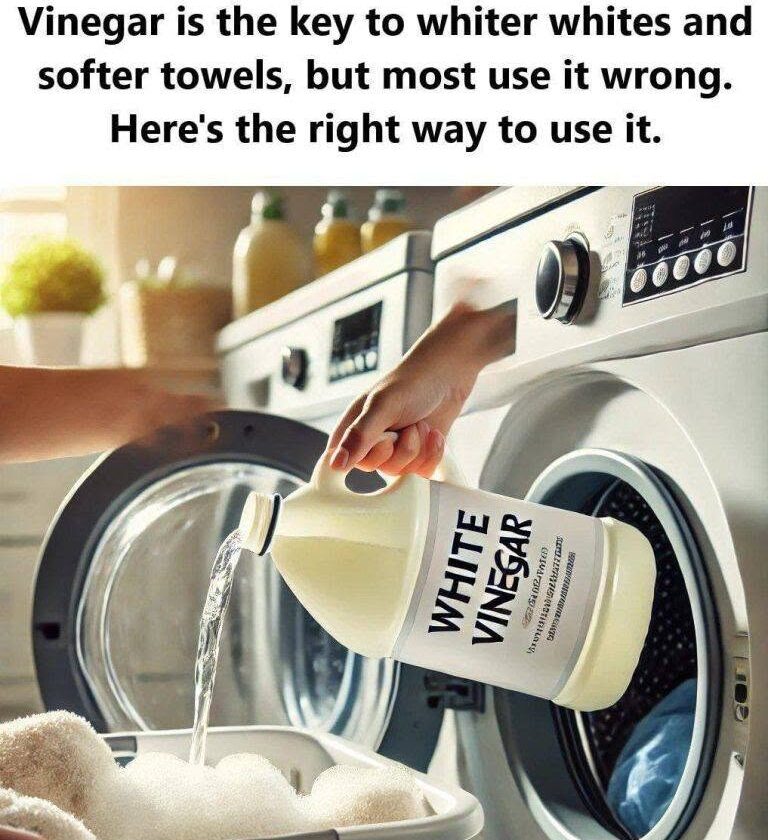
Vinegar: The Key to Whiter Whites and Softer Towels (But Most People Use It Wrong). Here’s the Right Way.
White vinegar is a popular laundry helper, but it is often surrounded by exaggerated claims. Used correctly, distilled white vinegar can help remove odors, reduce detergent residue, and soften fabrics naturally. It is not a true bleach replacement and will not magically restore heavily yellowed or stained whites.
How Vinegar Can Help Your Laundry
1. Softer Towels
Over time, towels can become stiff because detergent and fabric softener residues build up in the fibers.
How to use it:
- Add about ½ to 1 cup of distilled white vinegar to the washing machine’s rinse cycle (use the fabric softener dispenser if available).
- Wash as usual.
Vinegar helps remove residue that can make towels feel rough.
2. Reduce Musty Odors
Vinegar can help neutralize some unpleasant smells caused by detergent buildup, sweat, or mildew odors.
Tip: For very musty items, washing with vinegar and allowing items to dry completely can help.
3. Help Brighten Whites (Indirectly)
Vinegar does not bleach fabric, but it can:
- Remove leftover detergent film
- Help fabrics appear cleaner
- Reduce dullness caused by residue
For truly yellowed whites, oxygen bleach products designed for laundry are usually more effective.
Common Mistakes to Avoid
❌ Don’t Mix Vinegar With Chlorine Bleach
This can create dangerous chlorine gas. Never combine them in the same wash.
❌ Don’t Use Too Much
Large amounts of vinegar used frequently may affect some fabrics or rubber parts in washing machines over time.
❌ Don’t Use It With Every Fabric
Be cautious with:
- Delicate fabrics
- Certain stone-based materials (vinegar is acidic)
- Some specialty finishes
❌ Don’t Expect It to Replace Detergent
Vinegar helps with residue and odors but does not remove heavy dirt and stains like a proper laundry detergent