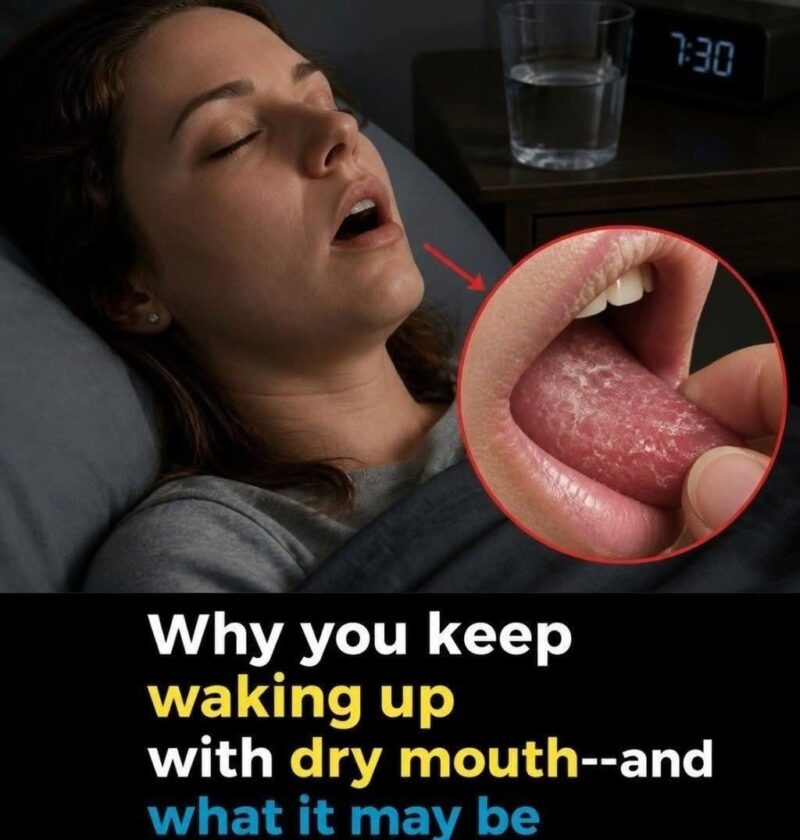
That headline is designed to spark curiosity. While waking up with a dry mouth can sometimes signal an underlying issue, it often has a simple explanation.
Common causes include:
- Sleeping with your mouth open, often due to nasal congestion or snoring.
- Dehydration, especially if you didn’t drink enough fluids the previous day.
- Medications, such as some antihistamines, antidepressants, blood pressure medications, and others that reduce saliva production.
- Alcohol or tobacco use, which can contribute to dryness.
- Sleep apnea, which is associated with mouth breathing and dry mouth.
- Medical conditions that affect saliva production, such as Sjögren syndrome or uncontrolled diabetes.
If dry mouth happens only occasionally, staying hydrated, addressing nasal congestion, or using a bedside humidifier may help. However, if it occurs frequently, is severe, or is accompanied by symptoms like excessive thirst, frequent urination, loud snoring with pauses in breathing, or difficulty swallowing, it’s worth discussing with a healthcare professional to identify the cause.
Persistent dry mouth shouldn’t be ignored because saliva helps protect your teeth and gums. Reduced saliva can increase the risk of cavities, gum disease, and oral infections.
So, the headline contains a kernel of truth—your body might be signaling something—but it overstates the case. Dry mouth is common and often due to benign causes, though persistent symptoms deserve medical evaluation.