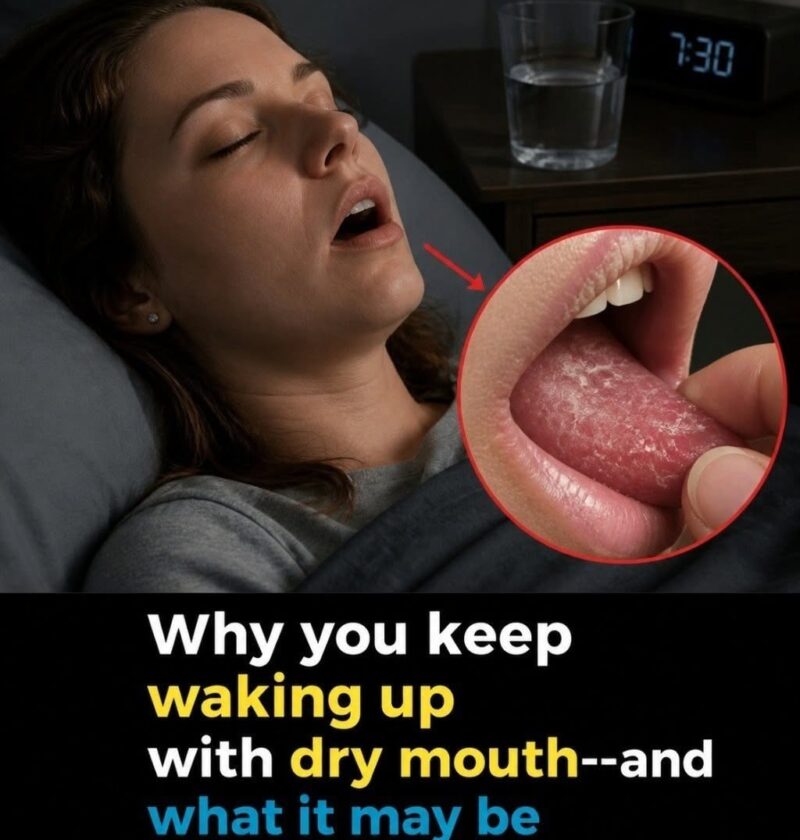
Waking up with a dry mouth is common, and it can happen for many reasons. It does not always mean something serious, but it can be a clue that your body or habits need attention.
Possible reasons you wake up with a dry mouth
- Sleeping with your mouth open
- Mouth breathing, often due to nasal congestion, allergies, or sleeping position, can dry out your mouth overnight.
- Dehydration
- Not drinking enough fluids during the day, heavy sweating, or drinking alcohol before bed can contribute.
- Snoring or sleep apnea
- Loud snoring, gasping during sleep, morning headaches, or daytime tiredness may be signs of a sleep-related breathing problem.
- Medications
- Many medicines can reduce saliva production, including some allergy medications, antidepressants, blood pressure medicines, and others.
- Dry indoor air
- Heating or air conditioning can reduce humidity and worsen mouth dryness.
- High blood sugar
- Frequent thirst, frequent urination, fatigue, or unexplained weight changes along with dry mouth can be signs that blood sugar should be checked.
- Oral health issues
- Reduced saliva can increase the risk of cavities, bad breath, gum problems, and mouth irritation.
What may help
- Drink enough water throughout the day.
- Avoid alcohol close to bedtime.
- Use a humidifier if the air is very dry.
- Treat nasal congestion if it is causing mouth breathing.
- Practice good oral hygiene and use fluoride toothpaste.
- Consider sugar-free gum or lozenges to stimulate saliva (if appropriate).
When to seek medical advice
Talk to a healthcare professional if dry mouth is persistent, severe, or accompanied by:
- Difficulty swallowing or speaking
- Frequent cavities
- Eye dryness
- Excessive thirst or urination
- Loud snoring, choking, or gasping during sleep
Occasional morning dry mouth is usually harmless, but frequent or worsening symptoms are worth investigating.