What Does the Color of Your Urine Say About Your Health?
Urine color can provide clues about hydration and certain health conditions, but it is not a diagnosis by itself. Foods, vitamins, medications, and supplements can also change urine color.
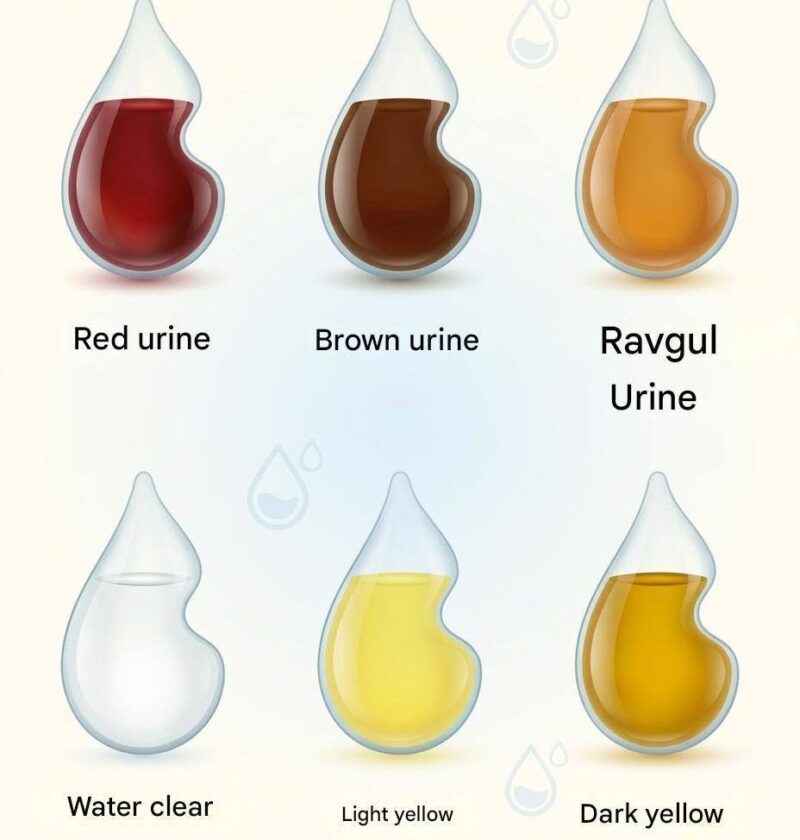
🟡 Pale yellow or straw-colored
- Usually indicates good hydration.
- Often considered a normal urine color.
🟨 Dark yellow or amber
- Commonly suggests you may need more fluids.
- Can occur after sweating, exercise, or not drinking enough water.
🟤 Brown or tea-colored
- May be caused by severe dehydration, certain medications, liver-related issues, or muscle breakdown.
- Persistent brown urine should be checked by a healthcare professional.
🔴 Pink or red
- Can come from foods such as beets, but may also indicate blood in the urine.
- If it cannot be explained by food or medication, it should be evaluated.
🟠 Orange
- May be related to dehydration, certain medicines, or problems involving the liver or bile system.
🔵 Blue or green
- Uncommon, but can occur due to certain medications, dyes, or rarely infections.
⚪ Cloudy or milky
- May be linked to dehydration, urinary tract infections, kidney stones, or other causes.
- More concerning if accompanied by pain, burning, fever, or a strong odor.
Other urine changes to notice:
- Foamy urine that persists: may sometimes indicate excess protein in urine.
- Very strong odor: can occur with dehydration or infection.
- Sudden changes in urine amount: may need medical evaluation.
When to seek medical advice:
Contact a healthcare professional if you notice:
- Blood in your urine
- Persistent dark or unusual urine color
- Painful urination
- Fever or back/flank pain
- Swelling, reduced urination, or sudden changes in urinary habits
For many healthy adults, urine that is light yellow is generally a sign of adequate hydration. Your overall symptoms and health history matter more than color alone.