What Does the Color of Your Urine Say About Your Health?Urine color can provide clues about your hydration level and, in some cases, changes in your health. However, urine color alone cannot diagnose a medical condition.
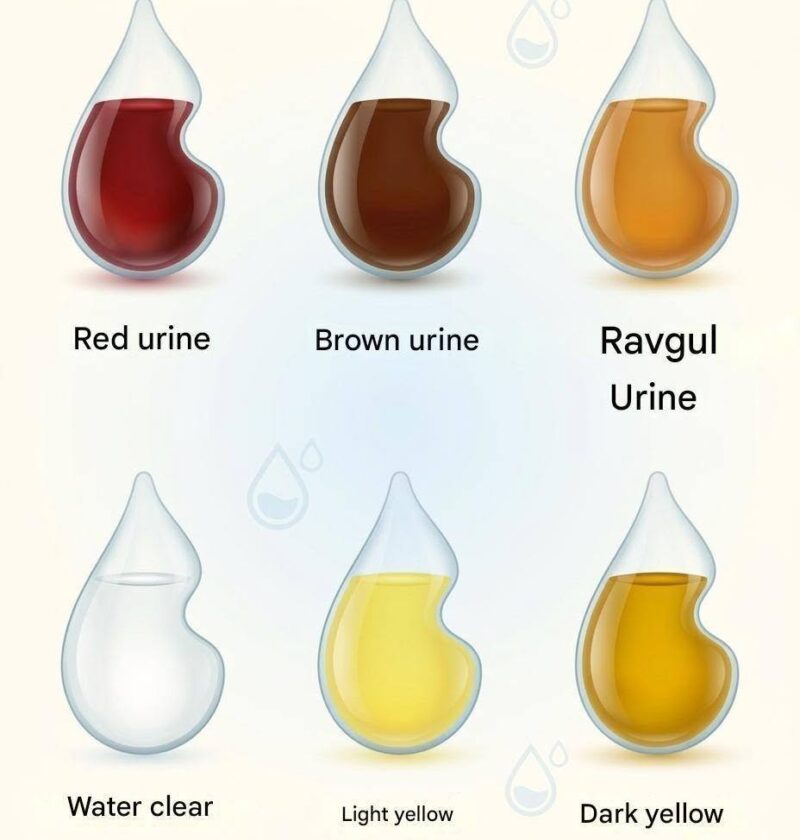
🟡 Pale yellow to clear
- Usually indicates good hydration.
- Completely clear urine all the time may mean you are drinking more fluid than you need.
🟨 Dark yellow or amber
- Often a sign you may need more fluids.
- Can happen after sweating, exercise, or not drinking enough water.
🟤 Brown or tea-colored
- May be caused by severe dehydration, certain foods, medications, or supplements.
- Persistent brown urine should be checked by a healthcare professional because it can sometimes be linked to liver, muscle, or other health issues.
🟠 Orange
- Can occur from dehydration, certain medications, or some foods.
- If it continues or comes with other symptoms (such as abdominal pain or yellowing of the skin/eyes), seek medical advice.
🔴 Pink or red
- Can result from foods like beets or certain medications.
- It may also indicate blood in the urine, which should be evaluated, especially if there is no obvious food-related cause.
🟢 Green or blue
- Rare, but can be caused by certain dyes, medications, supplements, or infections.
⚪ Cloudy or milky
- May be related to dehydration, crystals, infection, or other causes.
- If accompanied by burning, pain, fever, or a strong odor, it may need medical attention.
Tips for healthy urine habits
- Drink enough water so your urine is usually a light yellow color.
- Pay attention to sudden or lasting changes.
- Consider other symptoms, not just color.
See a healthcare professional if you notice:
- Blood in your urine
- Persistent dark, brown, or unusual urine color
- Pain or burning during urination
- Fever, back/flank pain, or feeling very unwell
- A major change that cannot be explained by food, medication, or hydration
Urine color is a useful clue, but your overall symptoms and health history matter most.