What Does the Color of Your Urine Say About Your Health? 🚽
Urine color can provide some clues, but it isn’t a reliable way to diagnose a disease. Hydration, foods, vitamins and medications can all change its appearance. Normal urine generally ranges from clear to pale yellow. (Mayo Clinic)
💧 What different colors may mean
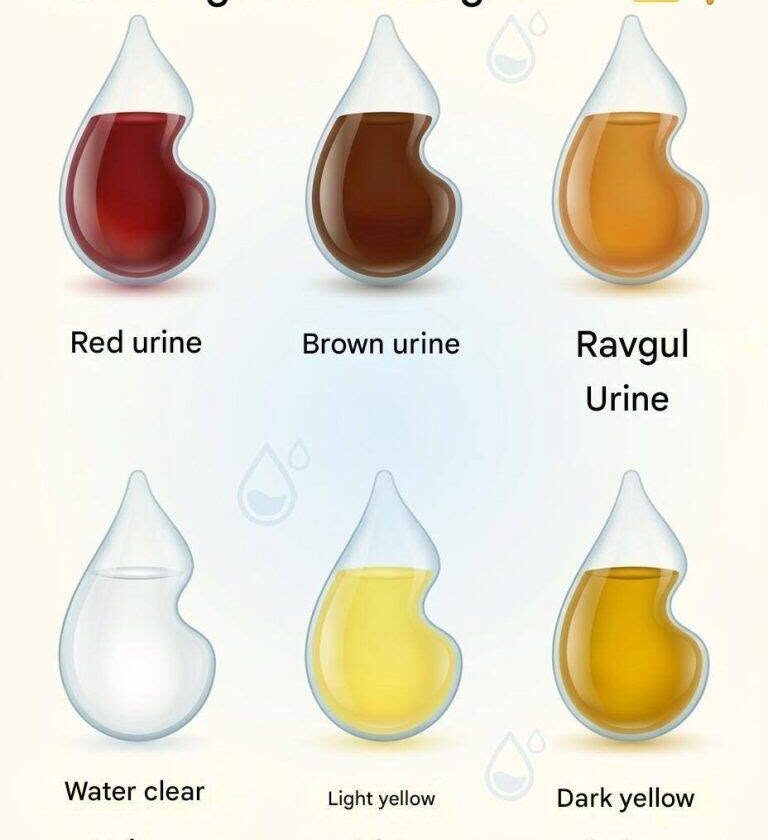
- Clear: You may simply be drinking plenty of fluids. Persistently crystal-clear urine can also occur when you’re drinking more than you need.
- Pale yellow: Generally a normal, well-hydrated appearance.
- Dark yellow/amber: Often means your urine is more concentrated, commonly because you’re not getting enough fluids. (Mayo Clinic)
- Pink or red: Can come from foods such as beets, but it can also indicate blood in the urine from a UTI, kidney stone or other condition. Visible blood should be medically evaluated. (Mayo Clinic)
- Orange: Can result from dehydration, certain medications or vitamins; occasionally it can be associated with liver or bile-duct problems, particularly with yellow skin/eyes or pale stools. (Mayo Clinic)
- Brown or cola-colored: May occur with severe dehydration, certain medicines or foods, but can also be associated with liver, kidney or muscle problems. (Mayo Clinic)
- Cloudy or milky: Sometimes associated with a urinary tract infection or kidney stones, although there are other causes. (Mayo Clinic)
- Blue or green: Unusual, but certain dyes and medications can cause it; in some cases, a urinary infection can produce green urine. (Mayo Clinic)
🚨 When not to ignore a color change
Seek medical advice if urine is red/bloody, persistently dark brown or unusually cloudy, particularly if you also have burning when urinating, fever, abdominal/side pain, or difficulty urinating. (Mayo Clinic)
Bottom line: Pale yellow is generally reassuring, while darker urine often simply reflects concentration. But persistent or unexplained color changes—especially blood in the urine—deserve attention rather than being dismissed as dehydration.