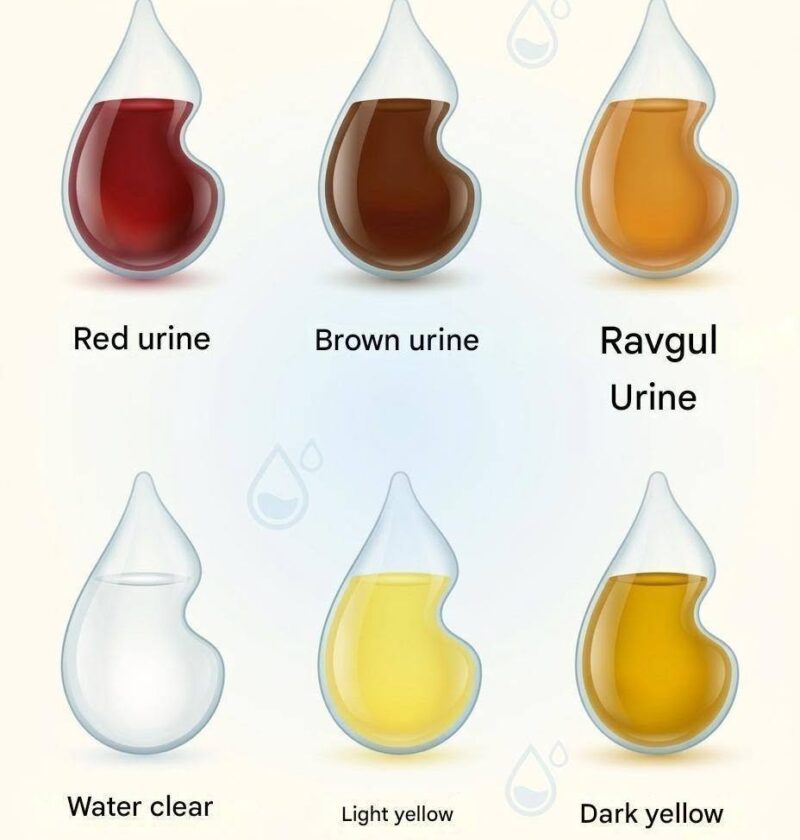
What does the color of your urine say about your health? 💧
Urine color can provide clues about hydration and certain health problems, but color alone can’t diagnose a condition.
🟨 Pale yellow: Usually normal and consistent with good hydration.
💛 Dark yellow/amber: Often means your urine is concentrated and you may need more fluids.
🟠 Orange: Can result from dehydration, vitamins or medications, but persistent orange urine—especially with yellow skin/eyes or pale stools—can indicate a liver or bile-duct problem.
M
Mayo Clinic
🩷 Pink/red: Beets and some medicines can cause this, but blood in the urine must be medically evaluated, even if there is no pain.
M
Mayo Clinic
+1
🟤 Brown/cola-colored: Can occur with severe dehydration, certain medications or foods, but may also be associated with liver/kidney problems or significant muscle injury.
M
Mayo Clinic
🟢 Green/blue: Unusual, but certain medicines, dyes and occasionally urinary infections can cause these colors.
M
Mayo Clinic
☁️ Cloudy/milky: Can occur with a urinary infection or kidney stones and is worth checking if it persists or comes with pain/burning.
M
Mayo Clinic
+1
🚨 When not to ignore it
Seek medical advice for visible blood in your urine, persistent unexplained color changes, or urine changes accompanied by fever, painful urination, back/side pain, or yellowing of the skin or eyes.
M
Mayo Clinic
+1
Bottom line: Pale yellow is generally reassuring, while darker urine often reflects concentration. But unusual colors can also come from foods and medicines, so don’t diagnose yourself from urine color alone.
M
Sources