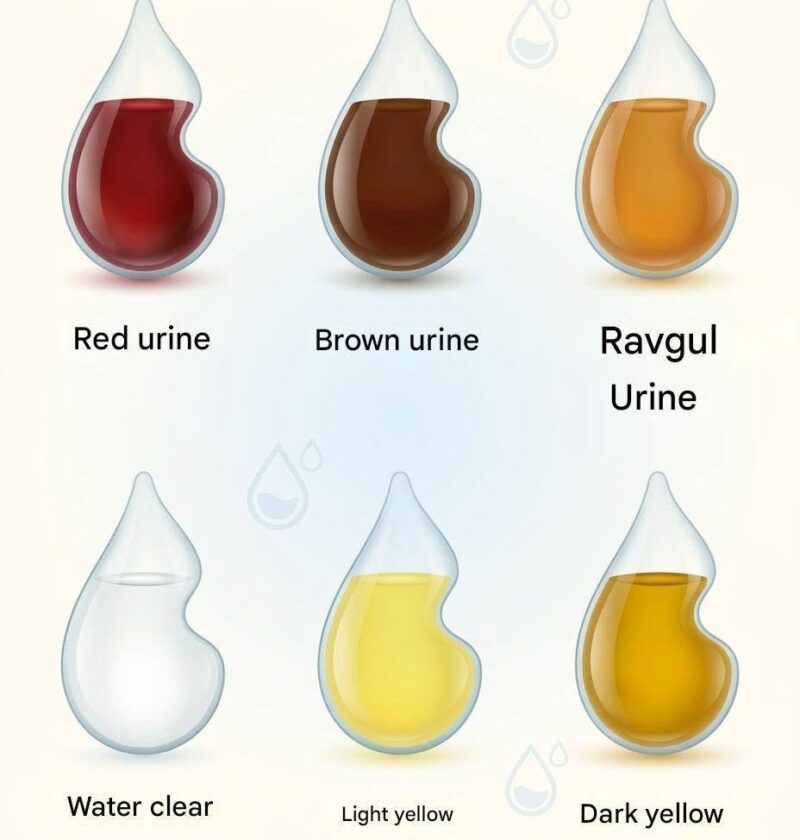
1. Clear Urine
What it may mean:
- You are very well hydrated.
- You may be drinking more water than your body needs.
When to be concerned:
Persistent clear urine accompanied by excessive thirst and frequent urination may warrant medical evaluation.
2. Pale Yellow to Light Straw
What it may mean:
- Normal and healthy hydration.
- Kidneys are functioning properly.
This is generally considered the ideal urine color.
3. Dark Yellow or Amber
What it may mean:
- Mild to moderate dehydration.
- Not drinking enough fluids.
- Excessive sweating or fluid loss.
What to do:
Increase your water intake and monitor whether the color returns to a lighter shade.
4. Orange Urine
Possible causes:
- Dehydration
- Certain vitamins, especially B vitamins
- Some medications
- Liver or bile duct problems (in some cases)
If orange urine persists or is accompanied by pale stools or yellowing of the skin, seek medical advice.
5. Pink or Red Urine
Possible causes:
- Foods such as beets, blackberries, or rhubarb
- Blood in the urine
- Urinary tract infections
- Kidney stones
- Kidney disease
Important:
Any unexplained red urine should be evaluated by a healthcare professional.
6. Brown or Dark Tea-Colored Urine
Possible causes:
- Severe dehydration
- Certain medications
- Liver disorders
- Muscle injury
Brown urine that persists should be medically assessed.
7. Blue or Green Urine
Possible causes:
- Certain medications or dyes
- Food coloring
- Rare genetic conditions
- Some urinary tract infections
Although uncommon, persistent blue or green urine should be discussed with a healthcare provider.
8. Cloudy or Murky Urine
Possible causes:
- Dehydration
- Urinary tract infection
- Kidney stones
- Presence of excess minerals
Medical evaluation may be needed if symptoms such as pain, fever, or burning during urination occur.
When to See a Doctor
Seek medical attention if you notice:
- Blood in the urine
- Persistent red, brown, or orange urine
- Pain during urination
- Fever or chills
- Severe back or side pain
- Sudden changes that do not resolve with hydration
The Bottom Line
Healthy urine is usually pale yellow to light straw in color. Temporary changes can occur because of foods, supplements, medications, or hydration status. However, persistent or unusual urine colors—especially red, brown, or cloudy urine—may signal a health issue and should not be ignored.
Remember that urine color alone cannot diagnose a condition. If you are concerned about changes in your urine, a healthcare professional can help determine the cause.