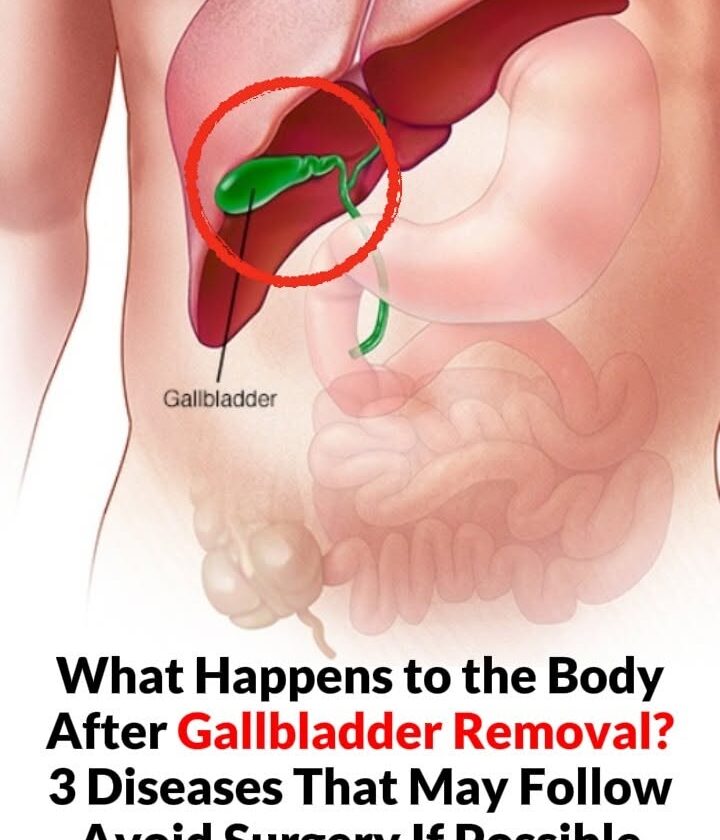
The title “What Happens to the Body After Gallbladder Removal? 3 Diseases That May Follow – Avoid Surgery If Possible” is misleading. Gallbladder removal (cholecystectomy) is a common and generally safe procedure, and for many people it provides long-term relief from painful gallstones or gallbladder disease. Surgery is recommended when the benefits outweigh the risks.
What happens after gallbladder removal?
The gallbladder stores bile made by the liver and releases it during meals, especially after eating fatty foods. After removal:
- The liver continues making bile.
- Bile flows directly into the small intestine instead of being stored.
- Most people can digest food normally, though some may notice temporary changes.
Possible changes after surgery
- Digestive changes
- Some people experience diarrhea, bloating, gas, or urgency to use the bathroom, especially in the first weeks or months.
- Eating smaller meals and gradually increasing fat intake may help.
- Bile-related symptoms
- A small number of people develop ongoing digestive discomfort related to changes in bile flow, sometimes called post-cholecystectomy syndrome.
- Weight or dietary changes
- Some people lose weight after surgery because they avoid foods that trigger symptoms.
- Others may gain weight if they return to a high-calorie diet.
Are there “3 diseases that follow” gallbladder removal?
There is no evidence that gallbladder removal routinely causes three specific diseases. However, some people may have an increased risk of certain issues depending on their overall health, diet, and other factors. Possible concerns that doctors may monitor include:
- Persistent digestive symptoms.
- Bile acid diarrhea (which can often be treated).
- Rare complications related to surgery or bile ducts.
Can surgery be avoided?
Sometimes, yes—depending on the condition:
- Asymptomatic gallstones may not require surgery.
- Lifestyle changes may help reduce symptoms in some cases.
- But repeated gallbladder attacks, inflammation, infection, blocked bile ducts, or certain complications often make surgery the safest option.
After gallbladder removal, helpful habits include:
✅ Eat balanced meals with moderate fat intake.
✅ Increase fiber gradually.
✅ Stay physically active.
✅ Follow up with your healthcare provider if symptoms persist.
Gallbladder removal is not something to avoid automatically; the right decision depends on why surgery is being considered, symptoms, risks, and individual health factors.