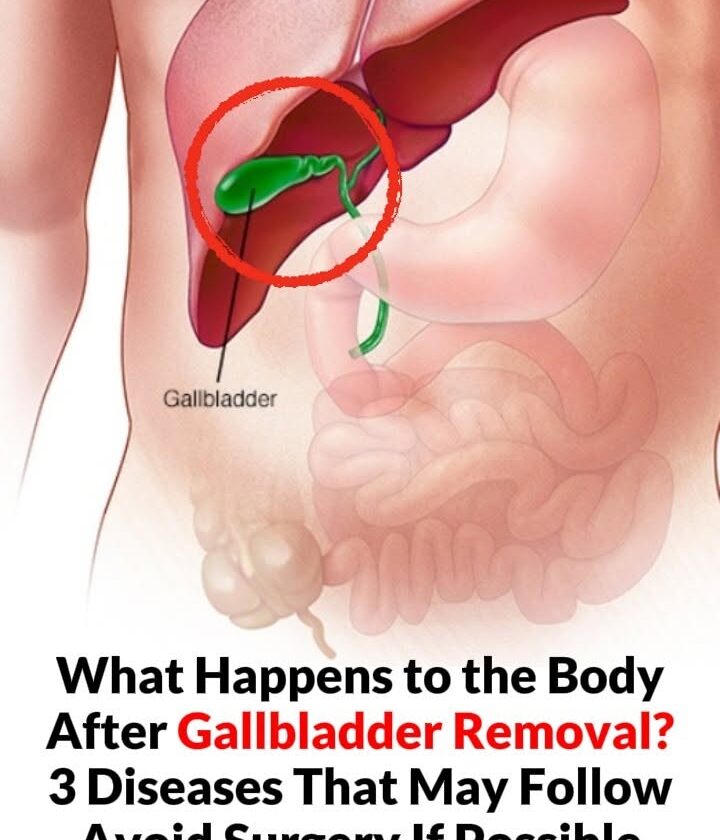
The headline “What Happens to the Body After Gallbladder Removal? 3 Diseases That May Follow – Avoid Surgery If Possible” is misleading. While gallbladder removal (cholecystectomy) can have side effects and isn’t necessary for everyone with gallstones, it is often the recommended and effective treatment for people with recurrent symptoms or complications.
What does the gallbladder do?
The gallbladder stores bile made by the liver and releases it into the small intestine to help digest fats.
After removal:
- The liver still makes bile.
- Bile flows directly into the intestine instead of being stored.
Most people digest food normally after recovery.
Possible effects after gallbladder removal
1. Changes in digestion
Some people experience:
- Diarrhea
- Bloating
- Gas
- Difficulty digesting very fatty meals
These symptoms are often temporary and improve over weeks or months.
2. Bile acid diarrhea
A small percentage of people develop persistent diarrhea because extra bile reaches the colon. If this occurs, treatments are available, so it’s worth discussing with a healthcare professional.
3. Ongoing digestive symptoms
Some people continue to have abdominal pain or indigestion after surgery. This doesn’t necessarily mean the surgery caused a new disease—sometimes another digestive condition, such as acid reflux or irritable bowel syndrome, is present.
Does surgery cause “3 diseases”?
There is no established list of three diseases that routinely develop after gallbladder removal. Online articles often exaggerate risks to discourage surgery.
Can gallbladder surgery be avoided?
Sometimes, yes—but it depends on the situation.
For example:
- Gallstones that cause no symptoms often don’t require surgery.
- If you have recurrent painful gallstone attacks, inflammation, infection, or pancreatitis caused by gallstones, surgery is commonly recommended because it can prevent serious complications.
When to seek urgent medical care
Seek prompt medical attention if you have:
- Severe pain in the upper right abdomen
- Fever with abdominal pain
- Yellowing of the skin or eyes (jaundice)
- Persistent vomiting
These symptoms may indicate a gallbladder or bile duct problem that needs urgent evaluation.