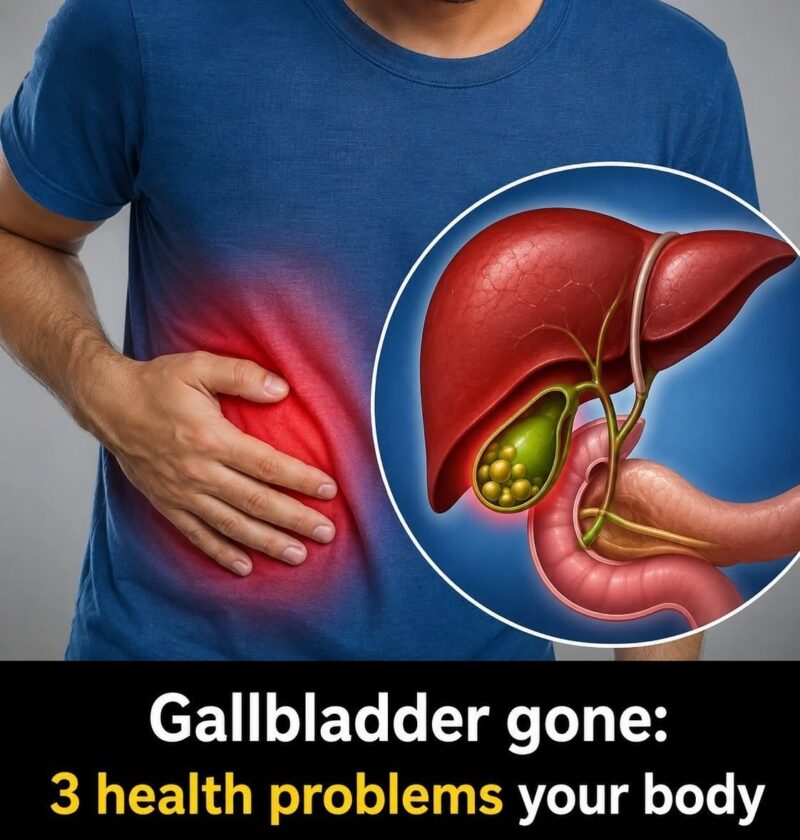
Gallbladder removal (Cholecystectomy) is a common operation, usually performed when gallstones cause repeated pain, inflammation, infection, or other complications. Many people live normally without a gallbladder, but the body does go through some changes afterward. The claim that you should “avoid surgery if possible” is too broad—whether surgery is appropriate depends on the person’s symptoms, risks, and medical findings.
What changes after gallbladder removal?
The gallbladder stores bile made by the liver and releases it when needed to help digest fats. After removal:
- Bile flows continuously into the intestine instead of being stored and released after meals.
- Some people may have temporary digestive changes, especially after fatty meals.
- Many people adapt within weeks to months and have no major long-term problems.
3 conditions that may occur after gallbladder removal
1. Post-cholecystectomy syndrome
Some people develop ongoing symptoms such as:
- Abdominal discomfort
- Bloating
- Indigestion
- Nausea
- Diarrhea
This can happen for different reasons, including bile-related changes, remaining stones, or other digestive conditions that were not caused by the gallbladder.
2. Bile acid diarrhea
Because bile enters the intestine more continuously, some people experience:
- Frequent loose stools
- Urgency to use the bathroom
- Diarrhea after meals
This can often be managed with diet changes and, when appropriate, medications prescribed by a clinician.
3. Increased risk of certain digestive issues in some people
Research has explored links between gallbladder removal and conditions such as bile reflux or changes in gut function. However, these risks vary, and gallbladder removal is not considered a cause of widespread disease for most patients.
When is gallbladder removal usually recommended?
Doctors commonly recommend surgery when there is:
- Recurrent painful gallstone attacks
- Gallbladder inflammation (cholecystitis)
- Blocked bile ducts
- Gallstone-related pancreatitis
- Certain high-risk gallbladder findings