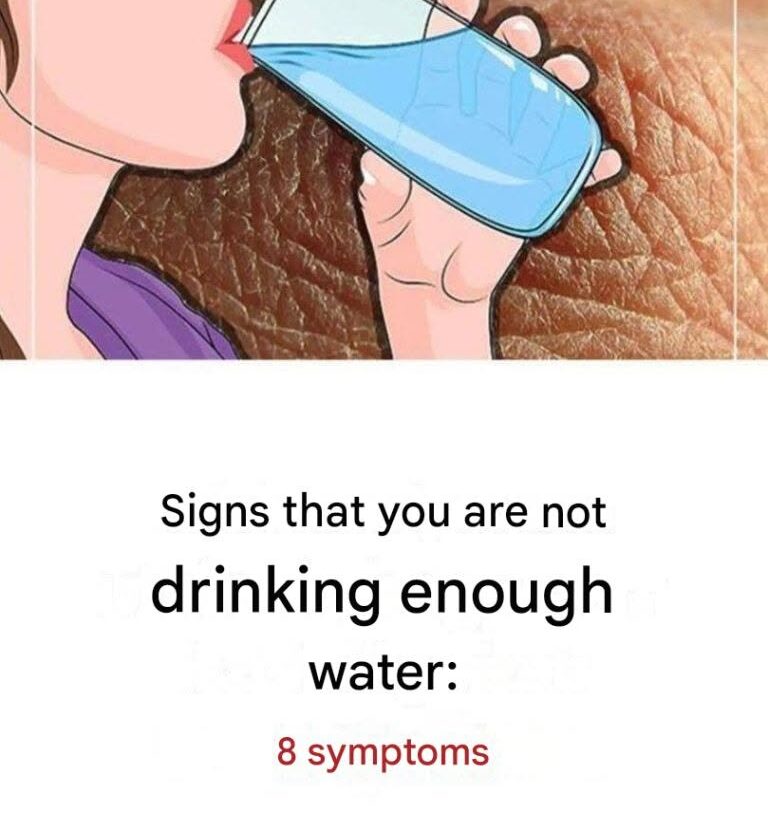
💧 What Happens to Your Body If You Don’t Drink Enough Water?
Your body needs water for temperature regulation, circulation, digestion, joint lubrication, and removing waste. When you lose more fluid than you replace, you can become dehydrated. (News in Health)
Early signs of dehydration
- 💧 Increased thirst
- 👄 Dry mouth or lips
- 🚽 Urinating less often
- 🟡 Darker-than-usual urine
- 😴 Fatigue or weakness
- 🤕 Headache
- 🌀 Dizziness or lightheadedness
- 💪 Muscle cramps (NIDDK)
You don’t always have to wait until you’re very thirsty to drink. Older adults may have a weaker thirst response, making them more susceptible to dehydration. (Northern Inyo Healthcare District)
🩺 What can happen if dehydration becomes severe?
Severe dehydration can lead to confusion, fainting, very little or no urine, rapid heartbeat, and rapid breathing. It can become life-threatening and requires prompt medical attention. (News in Health)
Dehydration can also contribute to constipation and kidney stones, and the risk increases with heat, exercise, fever, vomiting, or diarrhea. (CDC)
💦 How much water do you need?
There isn’t one universal amount for everyone. Fluid needs vary with body size, activity, climate, diet, illness, pregnancy, and medications. Water from food and other beverages also contributes to total fluid intake.
Bottom line: Don’t wait until you’re severely thirsty to think about hydration. Drink fluids regularly, especially during hot weather or physical activity, and pay attention to changes in urine output and color. (CDC)
If you have heart failure, kidney disease, or another condition requiring fluid restriction, follow your clinician’s specific fluid recommendations rather than deliberately increasing your water intake.