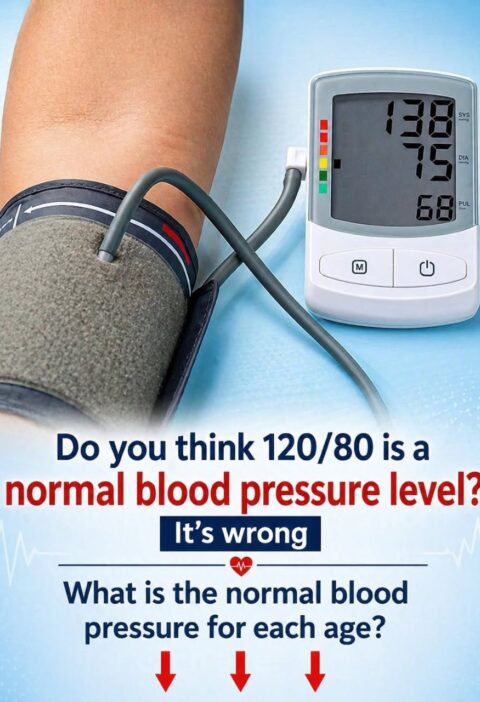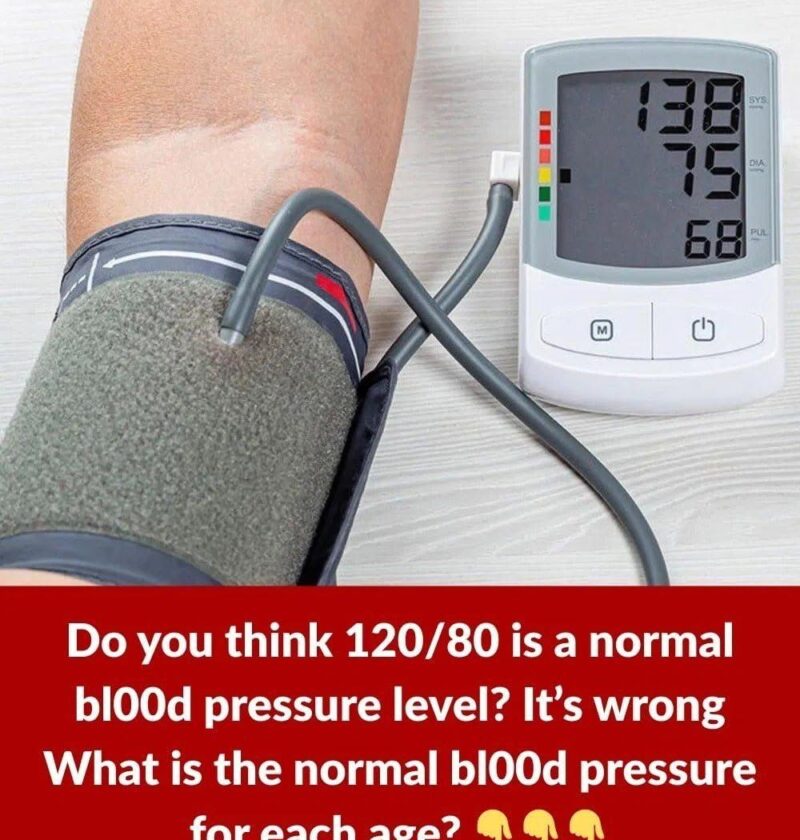
There isn’t a separate “normal blood pressure for each age” for adults. Modern guidelines use the same healthy target for most adults, with some adjustments based on health conditions.
🫀 Adult blood pressure (standard reference)
- Normal: below 120/80 mmHg
- Elevated: 120–129 / less than 80
- High BP (Stage 1): 130–139 / 80–89
- High BP (Stage 2): ≥140 / ≥90
- Hypertensive crisis: ≥180 / ≥120 (urgent care needed)
👶 Children & teens
Children don’t have one fixed “normal number.” It depends on:
- Age
- Height
- Sex
Doctors use percentile charts, but in general:
- Younger children → lower BP
- Teenagers → gradually approach adult range
👴 Older adults
Even though BP often rises with age, normal is still considered <120/80 mmHg for healthy adults.
However, doctors may adjust treatment goals if someone has:
- Frailty or dizziness
- Heart disease
- Kidney disease
- Risk of falls
Some older adults may safely have slightly higher targets depending on overall health.
🧠 Key takeaway
- There is no age-specific “normal BP” for adults
- Ideal goal is usually <120/80 mmHg
- Only children use age-based percentiles
📌 Important note
Blood pressure should be measured:
- At rest
- On multiple days
- With proper technique
One reading alone is not enough for diagnosis.
If you want, tell me your age and readings, and I can explain what they mean in your case.