Here’s what it actually means in a grounded, medical way:
👂 1. It mostly reflects aging
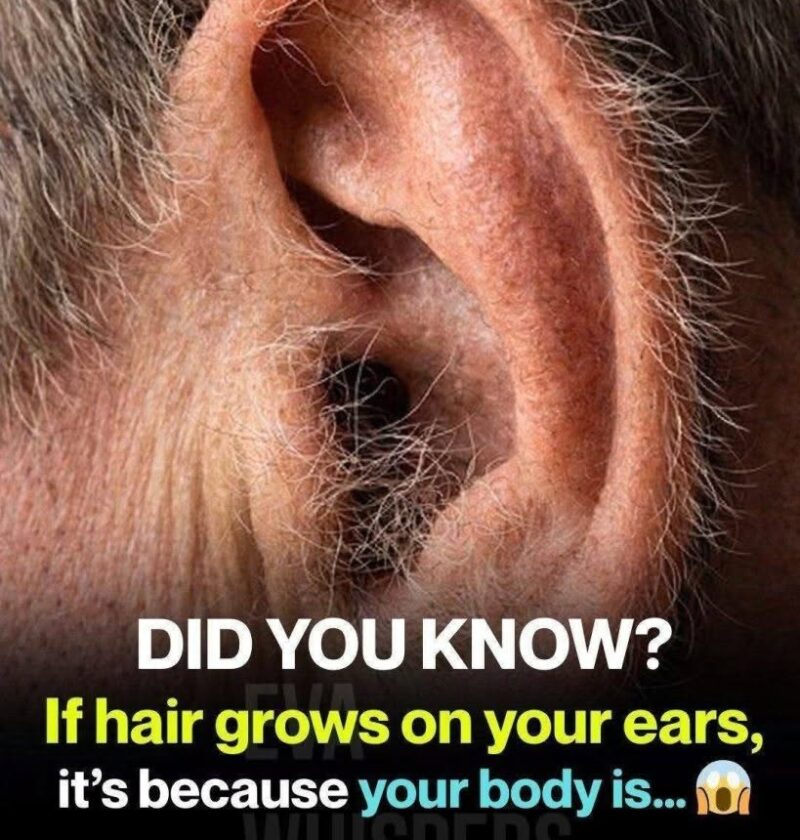
As men (and sometimes women) age, hair follicles in certain areas—especially the ears, nose, and eyebrows—can become more sensitive to androgens (male hormones like testosterone).
This is why thicker ear hair is more common in:
- Middle-aged and older men
- People with higher lifetime androgen activity
It’s usually just a normal aging change, not a health problem.
🧬 2. Genetics plays a big role
Ear hair density is strongly inherited. If older male relatives have noticeable ear hair growth, you’re more likely to develop it too.
So in many cases, it’s simply a family trait, not a medical signal.
⚖️ 3. Hormones influence growth patterns
Hair follicles respond differently to hormones depending on the body area. Ear hair follicles may become more active over time due to:
- Androgen sensitivity changes
- Normal hormonal shifts with age
This is similar to why scalp hair may thin while ear hair increases.
🚫 4. It is NOT a reliable disease indicator
There’s a popular myth that ear hair predicts heart disease or serious illness. There is no strong scientific evidence that ear hair alone can diagnose conditions like Coronary Artery Disease.
At most, age-related changes in hair growth patterns can coexist with other risk factors, but ear hair itself is not a diagnostic sign.
⚠️ 5. When it might matter indirectly
Very sudden or unusual hair changes across the body (not just ears) can sometimes reflect:
- Hormonal disorders
- Medication effects
- Endocrine changes
But isolated ear hair growth alone is not meaningful medically.
🧠 Bottom line
Ear hair is mostly:
- A normal part of aging
- Influenced by genetics and hormones
- Not a reliable indicator of hidden disease
If you want, I can also explain the difference between normal ear hair and excessive hair growth (hirsutism/hypertrichosis) and when it might actually need medical attention.