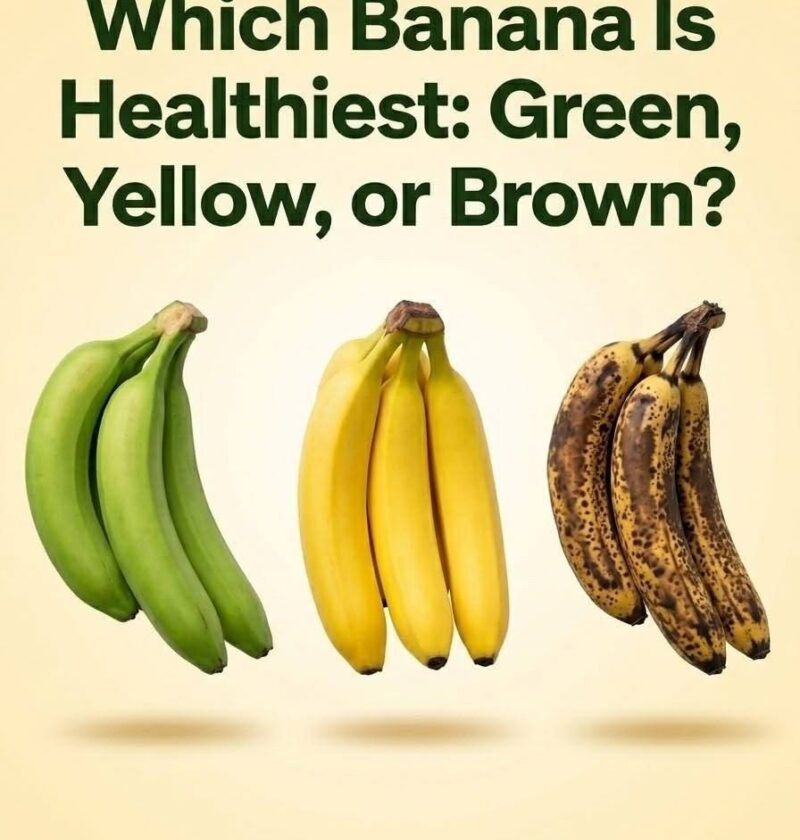
There isn’t one “healthiest” banana for everyone—the best choice depends on your health goals. The main difference is ripeness, which changes the type of carbohydrates in the banana.
🍌 Green bananas
Best for: blood sugar control and gut health
- Higher in resistant starch, a type of carbohydrate that digests more slowly.
- May cause a slower rise in blood sugar compared with very ripe bananas.
- Less sweet and slightly harder to digest for some people.
🍌 Yellow bananas (just ripe)
Best for: everyday eating
- A good balance of fiber, natural sweetness, and nutrients.
- Rich in potassium, vitamin B6, and vitamin C.
- Easy to digest for most people.
🍌 Yellow bananas with brown spots
Best for: quick energy
- More of the starch has turned into natural sugars.
- Softer, sweeter, and easier to digest.
- Useful before or after exercise when quick carbohydrates are helpful.
Nutritional highlights of a medium banana
- About 100–110 calories
- Around 3 grams of fiber
- Good source of potassium
- Provides vitamin B6 and vitamin C
Which one should you choose?
- Managing blood sugar: Choose a less ripe (slightly green) banana and pair it with protein or healthy fats (such as yogurt or nuts).
- General health: A yellow banana is an excellent choice.
- Exercise fuel: A ripe banana with brown spots can provide quick energy.
For most people, the “healthiest”