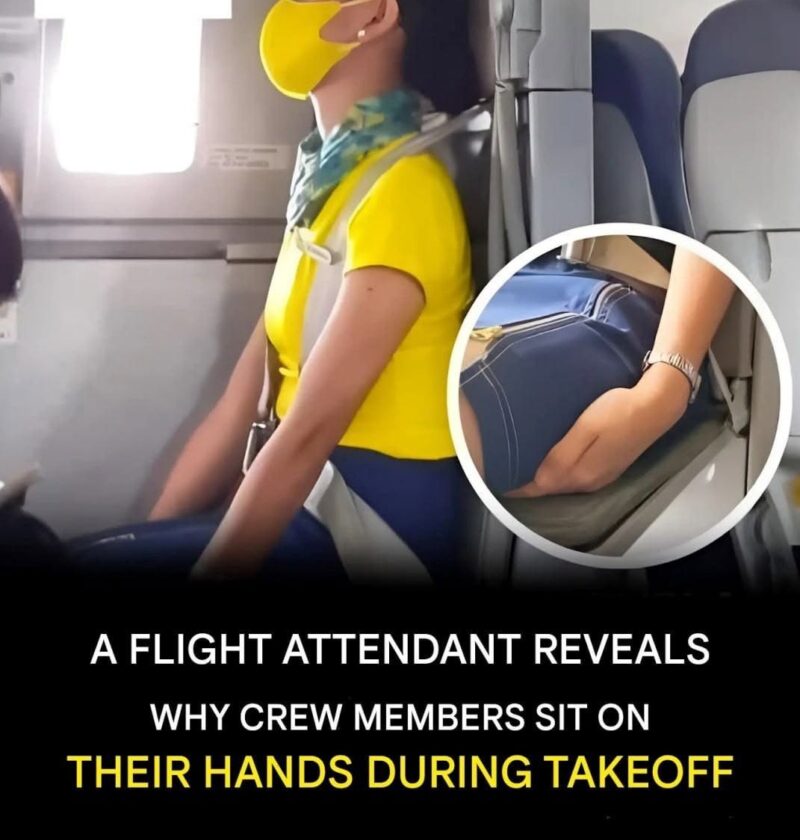
Flight attendants are often seen sitting with their hands tucked under their thighs during takeoff and landing because they are performing a brace position (or a modified brace posture) for safety.
The reasons include:
- Reducing injury risk: During takeoff and landing—the phases when most aviation incidents occur—the brace position helps keep the body stable and reduces the chance of flailing limbs.
- Keeping the body aligned: Sitting upright with hands restrained under the thighs helps keep the arms and shoulders in a more protected position during a sudden stop or impact.
- Improving readiness: Flight attendants must be alert and ready to respond quickly. The seated brace posture allows them to remain aware of the cabin and their surroundings.
- Avoiding loose objects: Hands placed under the thighs are less likely to get caught, hit nearby surfaces, or interfere with equipment.
Flight attendants also perform something called a “silent review” during takeoff and landing, mentally going through emergency procedures, exits, equipment locations, and possible actions. The hands-under-thighs posture is part of that prepared, secure seating position—not because they are relaxing or hiding anything.
The exact brace procedure can vary by airline and aircraft type, but the general purpose is the same: maximize safety and minimize injury risk during the most critical moments of flight.