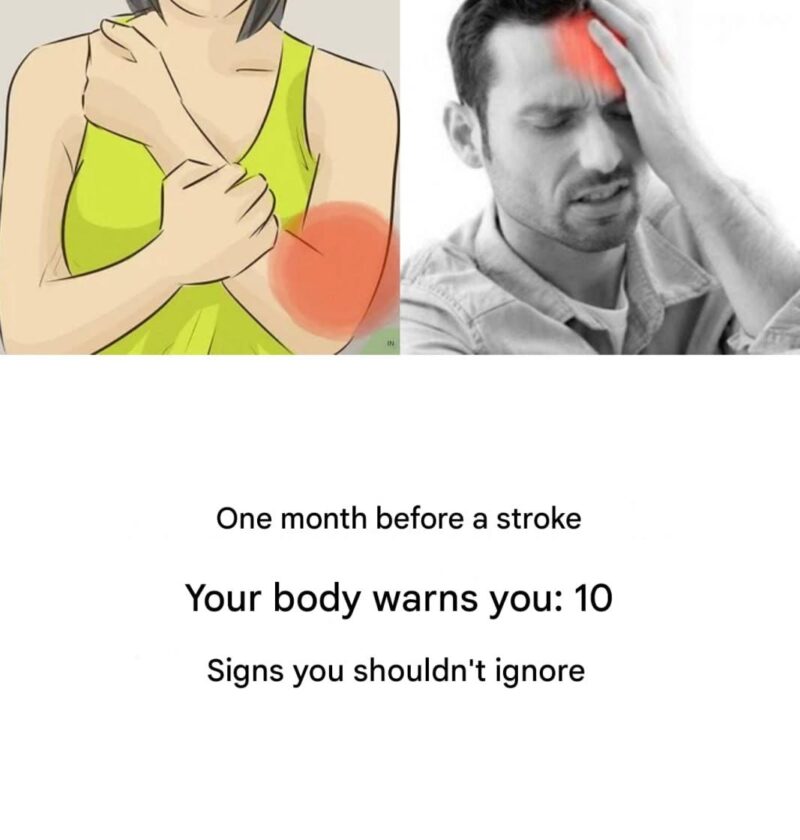
That headline is another common piece of health clickbait.There is no medically recognized set of “10 warning signs one month before a stroke” that reliably predicts a stroke that far in advance. Some people do experience warning symptoms, but they are usually sudden and close to the event, not weeks earlier in a predictable list.
What doctors do recognize: real stroke warning signs
A stroke happens when blood flow to part of the brain is blocked or a blood vessel bursts. The symptoms usually come on suddenly.
The most important warning system is FAST:
- F – Face drooping (one side of the face feels numb or looks uneven)
- A – Arm weakness (one arm drifts down or feels weak)
- S – Speech difficulty (slurred or strange speech)
- T – Time to call emergency services immediately
Other possible sudden symptoms of a Stroke include:
- sudden confusion or trouble understanding speech
- sudden vision loss in one or both eyes
- sudden dizziness, loss of balance, or coordination
- sudden severe headache with no known cause
What about “mini-strokes”?
Some people experience a TIA (transient ischemic attack), sometimes called a “mini-stroke.” These symptoms:
- appear suddenly
- last minutes to hours
- fully resolve
A TIA is a serious warning sign, but it does not come with a neat “30-day symptom checklist.”
Why these viral lists are misleading
Posts like “10 signs one month before stroke” usually:
- mix unrelated symptoms (fatigue, yawning, neck pain, etc.)
- exaggerate normal issues people commonly have
- create false certainty where none exists
This can be dangerous because it may distract people from real emergency signs.
What actually helps prevent stroke
Trusted health guidance from organizations like the American Heart Association focuses on:
- controlling blood pressure
- managing diabetes and cholesterol
- not smoking
- regular exercise
- healthy diet
If you want, I can break down early risk factors vs true emergency symptoms so you can quickly tell what actually matters in real life situations.