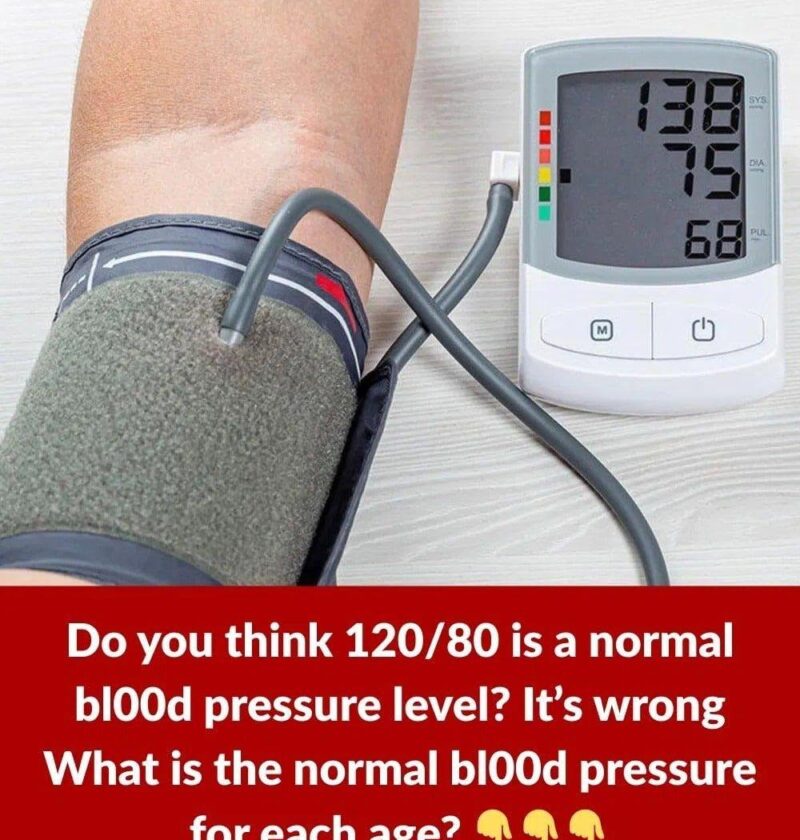
The idea that there is a separate “normal blood pressure” number for every age is not quite accurate. Blood pressure tends to rise as people get older, but medical guidelines generally use the same adult categories and consider many factors besides age.
General adult blood pressure ranges
| Blood pressure category | Systolic (top number) | Diastolic (bottom number) |
|---|---|---|
| Normal | Less than 120 | and less than 80 |
| Elevated | 120–129 | and less than 80 |
| High blood pressure (Stage 1) | 130–139 | or 80–89 |
| High blood pressure (Stage 2) | 140 or higher | or 90 or higher |
| Very high (hypertensive crisis) | 180 or higher | and/or 120 or higher |
Approximate healthy ranges by age (often cited, but not strict targets)
- 18–39 years: around 110–130 / 70–80 mmHg is commonly seen as a healthy range.
- 40–59 years: around 120–135 / 70–85 mmHg may be common.
- 60+ years: readings may be slightly higher on average, but many adults are still advised to aim for below 130/80 mmHg depending on health status and medical guidance.
Important points
- A single high reading does not diagnose hypertension. Multiple readings over time are usually needed.
- Older adults may have individualized targets depending on conditions such as heart disease, kidney disease, diabetes, medications, and risk of falls.
- Very low blood pressure can also be a concern if it causes symptoms like dizziness, fainting, or weakness.
If you share your age and your blood pressure reading (for example, 145/90), I can help explain what that number generally means.