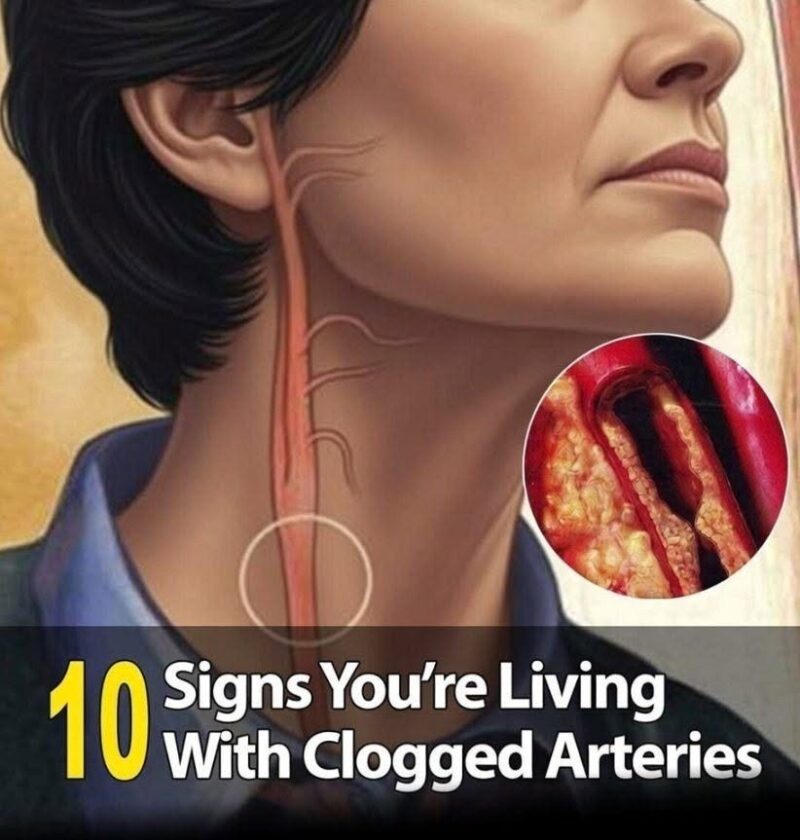
🫀 10 Signs of Blocked Arteries You Shouldn’t Ignore
“Blocked arteries” can mean different things depending on where plaque buildup occurs. Atherosclerosis can develop silently for years, so symptoms aren’t a reliable way to rule it out. When symptoms do appear, they depend on which arteries are affected. (NHLBI, NIH)
1. Chest pressure or discomfort
Pressure, squeezing, tightness, or burning in the chest—particularly during physical activity—can be a sign of reduced blood flow to the heart. (NHLBI, NIH)
2. Shortness of breath
Breathlessness during exertion can occur when the heart isn’t receiving enough oxygen-rich blood. (NHLBI, NIH)
3. Pain spreading to the arm, jaw, neck, or back
Heart-related discomfort can sometimes extend beyond the chest. (NHLBI, NIH)
4. Leg pain when walking
Pain, aching, heaviness, or cramping in the calf, thigh, buttock, or foot that starts with walking and improves with rest is a classic symptom of peripheral artery disease (PAD). (NHLBI, NIH)
5. Cold feet or one foot colder than the other
Reduced circulation can cause one foot or leg to feel noticeably colder than the other. (NHLBI, NIH)
6. Numbness, weakness, or tingling in a leg
These symptoms can occur with reduced blood flow to the limbs. (NHLBI, NIH)
7. Slow-healing sores on the feet or legs
Poor circulation can make wounds difficult to heal and increase the risk of infection. (NHLBI, NIH)
8. Pale, blue, or unusually dark skin
A change in the color of a foot or leg can be a sign of inadequate blood flow. (NHLBI, NIH)
9. Sudden neurological symptoms
Weakness or numbness on one side, difficulty speaking, confusion, or vision problems can indicate reduced blood flow to the brain and may represent a stroke or TIA. (NHLBI, NIH)
10. Erectile dysfunction
In men, erectile dysfunction can sometimes be an early warning sign of vascular disease because healthy erections depend on adequate blood flow. (NHLBI, NIH)
🚨 Don’t wait for all 10 symptoms
Atherosclerosis can cause no symptoms at all until significant disease or a complication develops. High blood pressure, high cholesterol, diabetes, smoking, and chronic kidney disease are important risk factors. (NHLBI, NIH)
Seek emergency medical care immediately for new or persistent chest pressure/pain, severe shortness of breath, or sudden stroke-like symptoms. A suddenly cold, pale/blue, numb, or immobile foot or leg is also an emergency because acute loss of blood flow can threaten the limb. (NHLBI, NIH)
Bottom line: Don’t try to diagnose “blocked arteries” from symptoms alone. If you have concerning symptoms or several cardiovascular risk factors, a healthcare professional can assess your risk and determine whether testing is appropriate.