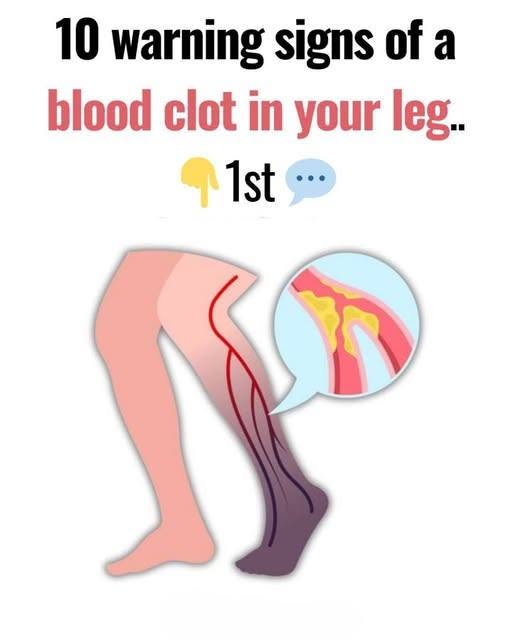
A blood clot in a deep vein of the leg is called deep vein thrombosis (DVT). It can be dangerous because part of the clot can break away and travel to the lungs, causing a pulmonary embolism (PE). Importantly, some DVTs cause few or no noticeable symptoms.
N
NHLBI, NIH
+1
10 possible warning signs
Swelling in one leg — particularly swelling that develops without an obvious injury.
Pain or tenderness — often in the calf or thigh and not explained by an injury.
Aching or cramping — the leg may feel unusually sore or heavy.
Increased warmth — the affected area may feel warmer than the surrounding skin.
Redness — the skin over the area may become red.
Skin discoloration — the leg can appear reddish, bluish, or otherwise different in color.
Pain when the area is touched — tenderness can occur around the clot.
Unexplained leg discomfort that persists — particularly when accompanied by swelling or warmth.
Sudden worsening of symptoms — rapidly increasing swelling or pain deserves prompt medical assessment.
Sometimes, no symptoms at all — a DVT can be “silent,” which is why symptoms alone cannot confirm or exclude a clot.
N
NHLBI, NIH
+1
🚨 The symptoms that mean emergency care
If a clot travels to the lungs, symptoms can include sudden difficulty breathing, chest pain that becomes worse with deep breathing or coughing, coughing up blood, a rapid or irregular heartbeat, lightheadedness, or fainting. These can indicate a pulmonary embolism and require immediate emergency medical attention.
C
CDC
+1
Who is at higher risk?
Risk increases with situations such as recent surgery or hospitalization, prolonged immobility or long-distance travel, significant injury, cancer, pregnancy/postpartum, estrogen-containing medications, older age, obesity, smoking, or a personal/family history of blood clots.
N
NHLBI, NIH
+1
Don’t try to diagnose a DVT from symptoms alone. Doctors may use a physical examination, blood tests such as D-dimer, and imaging—often an ultrasound—to determine whether a clot is present.
N
NHLBI, NIH
If you currently have new one-sided leg swelling, pain, warmth, or redness, especially after surgery, prolonged travel, or being immobilized, seek medical evaluation promptly. If you have chest pain or difficulty breathing, seek emergency care immediately.
N
C
Sources