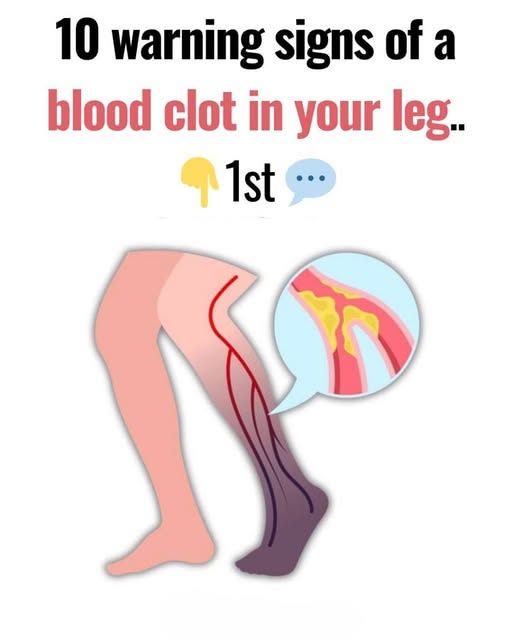
A blood clot in a deep vein of the leg, called deep vein thrombosis, can be serious because part of the clot can travel to the lungs. Recognizing the symptoms and seeking prompt medical care is important.
10 warning signs of a blood clot in the leg
- Swelling in one leg
- Sudden or unexplained swelling, usually affecting one leg rather than both.
- Pain or tenderness
- Pain that may feel like a cramp or soreness, often starting in the calf.
- Warm skin
- The affected area may feel warmer than the surrounding skin.
- Red or discolored skin
- The skin may appear red, purple, or darker than usual.
- Pain when standing or walking
- Discomfort may worsen with movement or when putting weight on the leg.
- A swollen vein
- Veins near the skin may become more noticeable or feel firm.
- A feeling of tightness
- The leg may feel unusually tight or full.
- Persistent calf pain
- Pain that does not improve with rest or has no clear cause.
- Heaviness in the leg
- The affected leg may feel unusually heavy or difficult to move.
- Symptoms in only one leg
- DVT typically affects one leg, although it can occur in either leg.
When to seek urgent medical care
Get medical attention promptly if you have symptoms suggestive of a blood clot, especially if you have leg swelling together with pain, warmth, or redness.
Call emergency services immediately if you develop symptoms that could mean the clot has traveled to the lungs, including:
- Sudden shortness of breath
- Chest pain that worsens with deep breathing
- Coughing up blood
- Fainting or severe dizziness
These symptoms can indicate a pulmonary embolism, which is a medical emergency.
Keep in mind that not everyone with a DVT has obvious symptoms, and these signs can also be caused by other conditions. A healthcare professional can evaluate the symptoms and, if needed, confirm the diagnosis with appropriate testing such as an ultrasound.