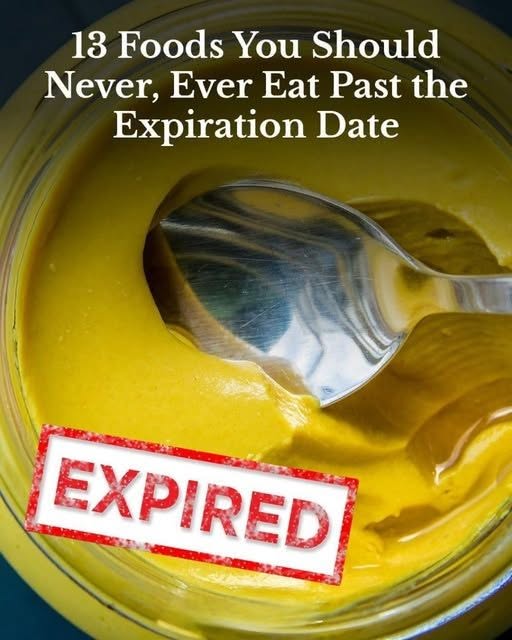
13 Foods You Should Never Eat Past the Expiration Date
One important correction: not every food becomes unsafe the day after the date printed on the package. In the U.S., many date labels are about quality rather than safety. Infant formula is the major exception: it should not be used after its “Use By” date. (U.S. Food and Drug Administration)
For foods with a true use-by/expiration date, or foods that have been improperly stored, don’t take chances.
Foods that deserve extra caution
- Infant formula 🍼 — Never use it after the labeled “Use By” date. (U.S. Food and Drug Administration)
- Fresh raw meat 🥩 — Discard if it has passed its safe storage period or has been improperly refrigerated.
- Fresh poultry 🍗 — Highly perishable and should be handled according to recommended refrigeration times.
- Fresh ground meat 🍔 — Spoils relatively quickly and requires careful refrigeration.
- Fresh fish and seafood 🐟 — Particularly perishable; don’t rely on smell alone to determine safety.
- Deli meats and refrigerated meat products 🥪 — Follow storage instructions and discard if spoiled or improperly stored.
- Unpasteurized milk 🥛 — Carries a higher risk of harmful bacteria and requires particular care.
- Soft fresh cheeses 🧀 — Refrigerated soft cheeses can support harmful microorganisms under unfavorable storage conditions.
- Refrigerated prepared salads 🥗 — Egg, chicken, tuna, and similar ready-to-eat salads are highly perishable.
- Freshly prepared leftovers 🍲 — Their safety depends heavily on how quickly they were refrigerated and how long they’ve been stored.
- Cut fresh fruit and vegetables 🍉 — Once cut, they are more vulnerable to contamination and spoilage.
- Fresh eggs 🥚 — Keep refrigerated and follow local food-safety guidance; discard cracked or improperly stored eggs.
- Refrigerated baby food 👶 — Follow the manufacturer’s storage and discard instructions carefully, particularly once opened.
⚠️ Don’t automatically throw away every food past its date
A “Best By” date generally indicates when a product is expected to have its best quality—not necessarily the day it becomes dangerous. FDA notes that many packaged foods can remain acceptable after that date when properly stored. (U.S. Food and Drug Administration)
Instead, pay attention to storage conditions, the type of date on the package, and obvious spoilage such as unusual appearance, texture, odor, leaking, or damaged packaging.
When in doubt about a highly perishable food, especially food for a baby, pregnant person, older adult, or someone with a weakened immune system, it’s safer to throw it away.