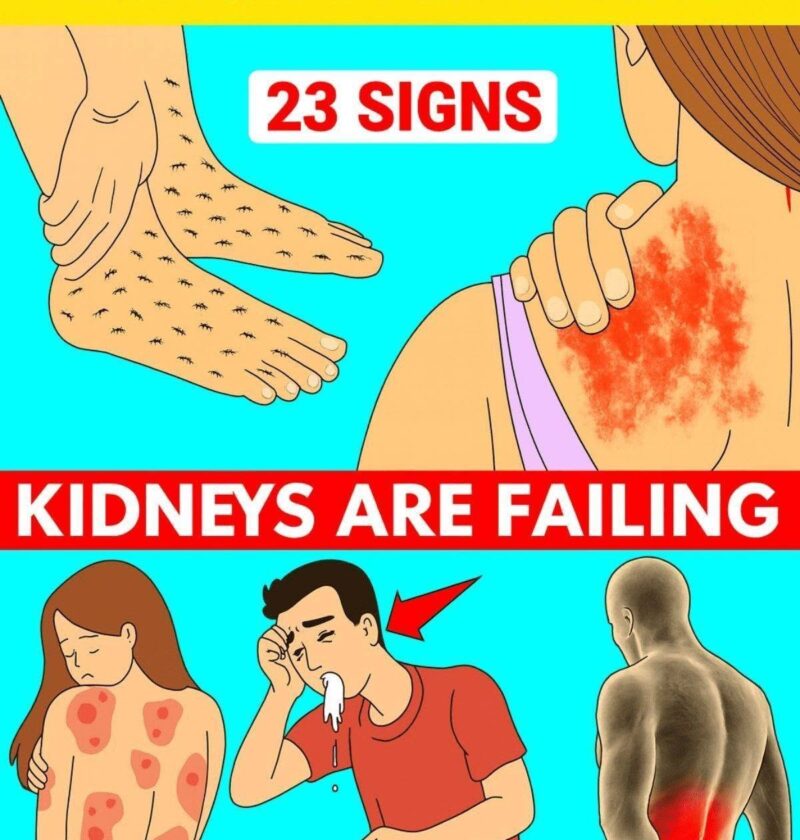
The headline “23 Strange Signs Your Kidneys Might Be in Trouble” is designed to attract attention. While kidney disease can cause a variety of symptoms, many people with early kidney disease have no symptoms at all. Blood and urine tests are often needed to detect it.
Some possible signs of kidney problems include:
- Swelling of the feet, ankles, legs, or around the eyes
- Changes in urination, such as urinating more or less often, especially at night
- Foamy urine, which can indicate excess protein in the urine
- Blood in the urine
- Persistent fatigue or weakness
- Loss of appetite, nausea, or vomiting
- Itchy skin, especially in more advanced kidney disease
- Muscle cramps
- Difficulty concentrating or feeling mentally foggy
- High blood pressure, which can both cause and result from kidney disease
- Shortness of breath due to fluid buildup or anemia in advanced disease
Who is at higher risk?
You may be at increased risk if you have:
- Diabetes
- High blood pressure
- Heart disease
- A family history of kidney disease
- Age over 60
When to seek medical care
Arrange medical evaluation if you notice persistent symptoms or have risk factors. Seek urgent care if you have:
- Blood in your urine
- Very little or no urine output
- Severe swelling
- Severe shortness of breath
- Confusion or chest pain
The most reliable way to check kidney health
Kidney disease is best detected with:
- A blood test to measure creatinine and estimate kidney function (eGFR)
- A urine test to check for protein or blood
These tests can identify kidney disease before symptoms develop, which is why regular screening is important for people at higher risk.