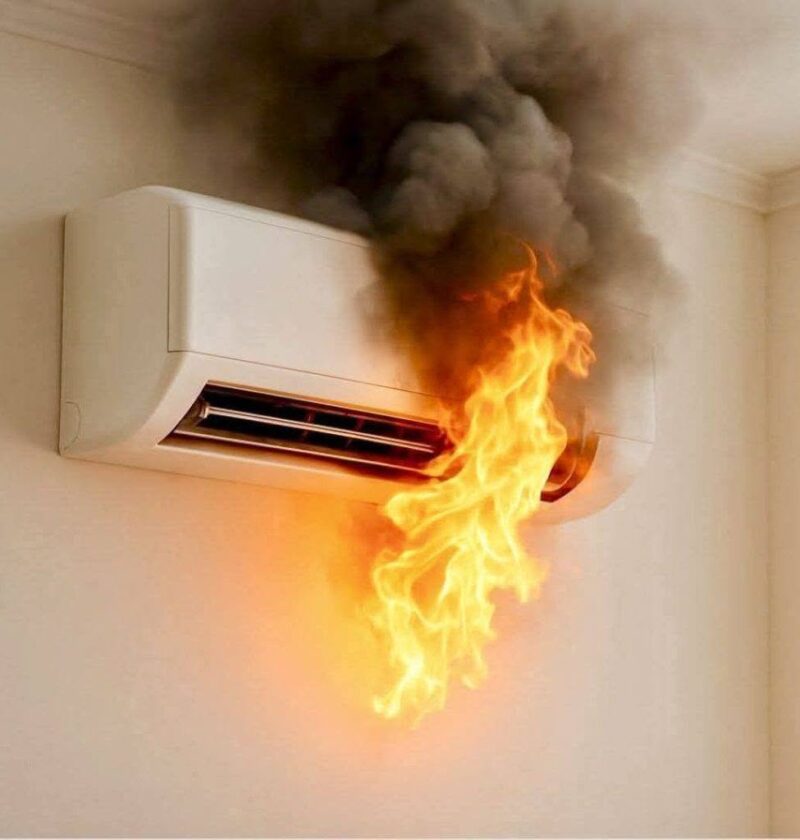
5 Critical Fire and Explosion Hazards in Air-Conditioning Systems
Air conditioners are generally safe when correctly installed and maintained, but refrigerants, electrical equipment, pressure, and heat can create serious hazards if a system is improperly serviced.
1. Using the wrong or highly flammable refrigerant
Never substitute an unapproved refrigerant—particularly propane or another highly flammable product—for the refrigerant specified for the equipment. The EPA has warned that doing so can create fire and explosion risks.
2. Mishandling newer A2L refrigerants
Some newer lower-GWP refrigerants are classified A2L (lower flammability). They aren’t equivalent to highly flammable refrigerants, but equipment and servicing procedures must account for their properties. ASHRAE standards specify particular safety requirements for systems using flammable refrigerants.
3. Refrigerant leaks near an ignition source
A refrigerant leak can create a combustible mixture under the right conditions. Research has demonstrated that some A2L refrigerants can be ignited by certain sufficiently energetic ignition sources.
If you suspect a refrigerant leak, don’t use an open flame to locate it and don’t attempt an improvised repair.
4. Faulty electrical wiring or connections
Loose connections, damaged wiring, overheated components, or improperly installed electrical equipment can produce heat or arcing and potentially start a fire.
If you notice burning smells, buzzing, visible scorching, repeated breaker trips, or melted wiring, turn the system off and have it inspected by a qualified professional.
5. Improper servicing of a pressurized system
Air-conditioning systems contain refrigerant under pressure. Incorrect charging, recovery, brazing, or opening of components can cause serious injury as well as equipment damage. Refrigerant systems should be serviced using equipment and procedures appropriate for the specific refrigerant and system.
🚨 One important warning
Never add a different refrigerant simply because it seems compatible or is cheaper. The refrigerant specified on the equipment’s nameplate and manufacturer documentation matters. The EPA has documented injuries and property damage associated with inappropriate flammable refrigerant substitutions.