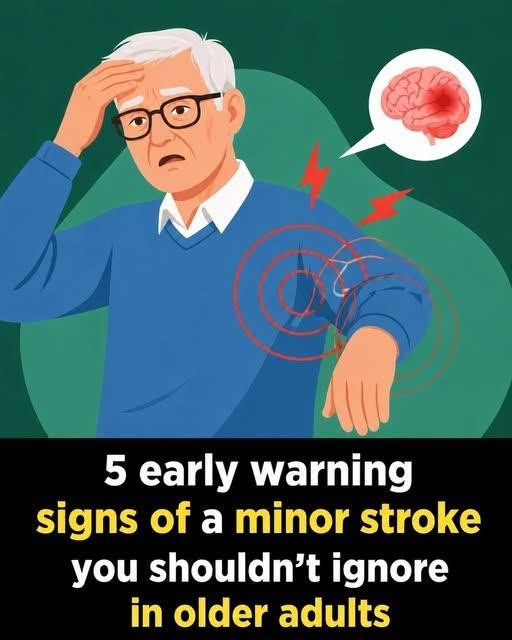
5 Symptoms of a Mini-Stroke (TIA) in Seniors That Shouldn’t Be Ignored
A mini-stroke, medically called a transient ischemic attack (TIA), happens when blood flow to part of the brain is temporarily blocked. Symptoms may last only minutes or hours and then disappear, but a TIA can be a warning sign of a possible future stroke and should be taken seriously.
A person should seek urgent medical evaluation if these symptoms occur—even if they go away.
1. Sudden weakness or numbness
Watch for:
- Weakness or tingling in the face, arm, or leg
- Symptoms usually affecting one side of the body
- Difficulty lifting an arm or holding objects
2. Sudden trouble speaking or understanding
Signs may include:
- Slurred speech
- Trouble finding the right words
- Difficulty understanding what others are saying
- Sudden confusion
3. Sudden vision changes
Possible symptoms:
- Blurred vision
- Double vision
- Loss of vision in one eye or part of the visual field
4. Sudden dizziness, loss of balance, or coordination problems
A person may experience:
- Trouble walking
- Feeling unsteady
- Loss of coordination
- Sudden clumsiness
5. Sudden severe headache or unusual neurological symptoms
A sudden, intense headache—especially if it is different from previous headaches—or symptoms such as confusion, weakness, or vision changes require prompt attention.
Remember FAST
F — Face: Does one side of the face droop?
A — Arms: Can both arms be raised normally?
S — Speech: Is speech unclear or unusual?
T — Time: Call emergency services immediately.
Why quick action matters
A TIA may be brief, but it can indicate an increased risk of a full stroke. Medical professionals can evaluate possible causes, such as blood pressure problems, artery narrowing, or heart rhythm issues, and recommend ways to reduce future risk.
Stroke risk can be lowered by:
- Controlling high blood pressure
- Managing diabetes and cholesterol
- Not smoking
- Staying physically active
- Following prescribed medications
- Treating heart rhythm conditions such as atrial fibrillation when present
If an older adult has experienced any sudden episode of weakness, speech difficulty, vision loss, or confusion—even if it resolved—contact a healthcare professional promptly.