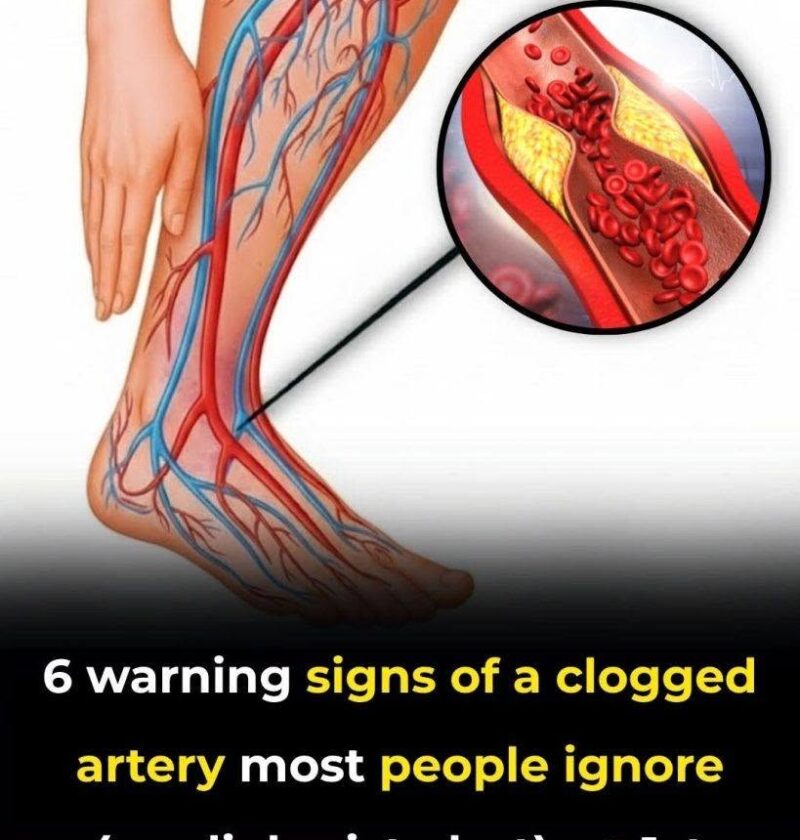
The headline “6 warning signs of a clogged artery most people ignore (cardiologist alert)” is attention-grabbing, but it’s true that artery narrowing (often due to atherosclerosis) can sometimes develop quietly. Many people have no symptoms until the blockage becomes significant.
Possible warning signs that may deserve medical attention include:
1. Chest discomfort or pressure
- A feeling of squeezing, heaviness, tightness, or pressure in the chest—especially during activity or stress—can be a sign of reduced blood flow to the heart.
2. Shortness of breath
- Feeling unusually breathless with exertion can occur when the heart is not receiving enough oxygen-rich blood.
3. Pain or discomfort in other areas
- Heart-related discomfort may spread to the arm, shoulder, neck, jaw, back, or upper abdomen.
4. Unusual fatigue
- Some people, especially older adults and people with diabetes, may experience unexplained tiredness instead of obvious chest pain.
5. Leg pain during walking
- Cramping or aching in the calves, thighs, or hips while walking that improves with rest can be a sign of reduced blood flow in the leg arteries (peripheral artery disease).
6. Dizziness, fainting, or changes in exercise ability
- These symptoms can have many causes, but sudden or concerning changes should be evaluated.
Seek emergency care immediately for:
- Chest pressure or pain that lasts more than a few minutes or returns repeatedly
- Trouble breathing
- Sudden weakness on one side of the body, facial drooping, or speech difficulty
- Fainting with concerning symptoms
Lowering artery disease risk
- Keep blood pressure, cholesterol, and blood sugar controlled.
- Avoid smoking.
- Stay physically active.
- Eat a heart-healthy diet.
- Take prescribed medications as directed.
Atherosclerosis is often called a “silent” condition because prevention and regular checkups are important even before symptoms appear. If you have risk factors such as diabetes, smoking history, high cholesterol, or a family history of heart disease, discuss screening with a healthcare professional.