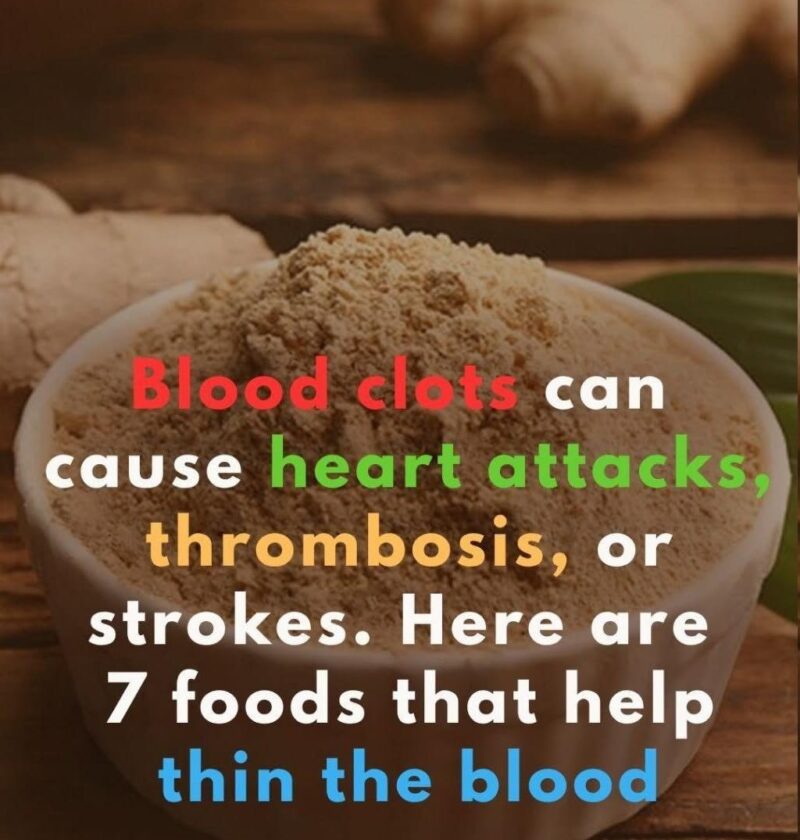
Some foods contain natural compounds that can affect blood clotting or platelet function, but they are not substitutes for prescribed blood-thinning medications such as warfarin, apixaban, rivaroxaban, or clopidogrel. If you take a blood thinner, talk with your healthcare professional before making major dietary changes.
Here are 7 foods often associated with mild blood-thinning effects:
- Garlic
- Contains compounds that may reduce platelet aggregation in laboratory and some human studies.
- Ginger
- May have mild effects on platelet function, especially in larger amounts.
- Turmeric
- Contains curcumin, which has shown anti-inflammatory and mild anticoagulant effects in research.
- Fatty fish
- Fish such as salmon, sardines, and mackerel provide omega-3 fatty acids, which may modestly reduce platelet stickiness.
- Berries
- Blueberries, strawberries, and other berries contain compounds that support cardiovascular health, though their blood-thinning effect is generally mild.
- Grapes
- Especially red and purple grapes, which contain polyphenols such as resveratrol.
- Tomatoes
- Some studies suggest tomatoes and tomato products may have a modest effect on platelet function.
Important considerations
- These foods do not prevent or treat blood clots on their own.
- If you are taking warfarin, it’s important to keep your intake of vitamin K–rich foods (such as spinach, kale, and broccoli) consistent, rather than avoiding them completely, because sudden changes can affect how warfarin works.
- Large amounts of garlic, ginger, turmeric, or certain supplements may increase bleeding risk when combined with blood-thinning medications.
Seek medical advice if you notice:
- Unusual bruising
- Nosebleeds that are difficult to stop
- Blood in your urine or stool
- Vomiting blood or coughing up blood
- Severe headache or bleeding after an injury
A heart-healthy eating pattern that includes fruits, vegetables, whole grains, legumes, nuts, and fish is generally more important for cardiovascular health than focusing on individual “blood-thinning” foods.