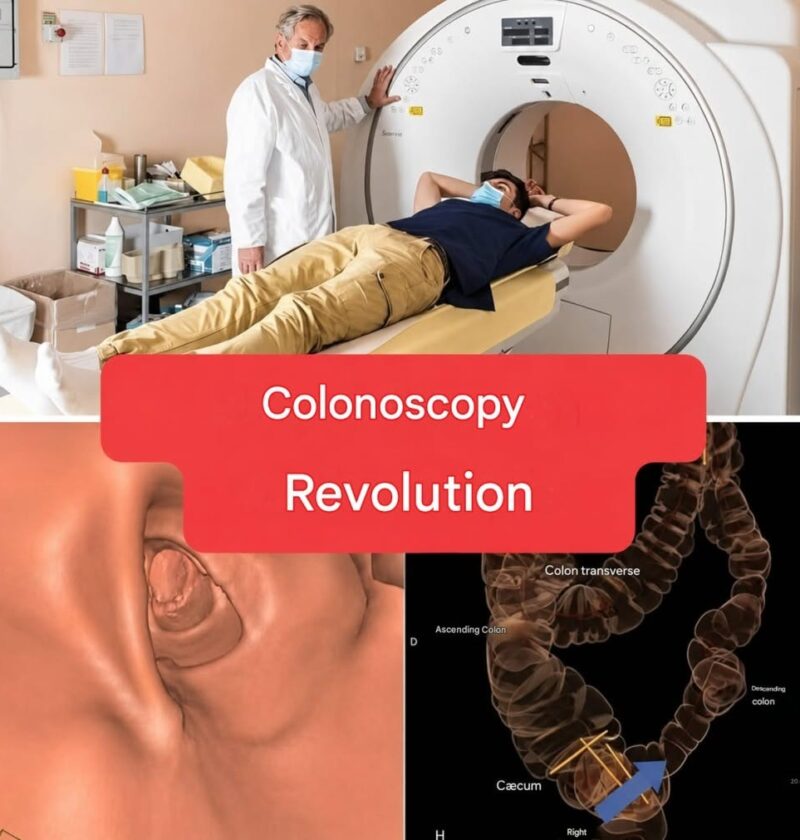
Claims that a “new method” means colonoscopy will no longer be an invasive examination are misleading. While researchers continue to develop less invasive screening options, traditional colonoscopy remains the gold standard for detecting and removing precancerous polyps.
Here are some alternatives that are available or being studied:
- Stool-based tests
- Detect hidden blood or DNA changes associated with colorectal cancer.
- Can be done at home.
- If the result is positive, a follow-up colonoscopy is still needed.
- CT colonography (virtual colonoscopy)
- Uses a CT scan to create images of the colon.
- Does not require inserting a long scope through the entire colon.
- Still requires bowel preparation, and a standard colonoscopy is needed if abnormalities are found.
- Colon capsule endoscopy
- Involves swallowing a pill-sized camera that takes images as it passes through the digestive tract.
- May be an option for some patients but is not a replacement for colonoscopy in many situations.
- If polyps or suspicious findings are detected, a conventional colonoscopy is usually required.
Will colonoscopy become obsolete?
Not at this time. Although less invasive technologies are improving, they generally cannot remove polyps or take tissue samples (biopsies) during the same procedure. Conventional colonoscopy remains the only test that both detects and treats many precancerous lesions in a single examination.
Bottom line
If you see headlines claiming that colonoscopy has been replaced by a completely non-invasive method, treat them with caution. New screening technologies are expanding options for patients, but they have not eliminated the need for conventional colonoscopy, especially when abnormalities are suspected or treatment is required.