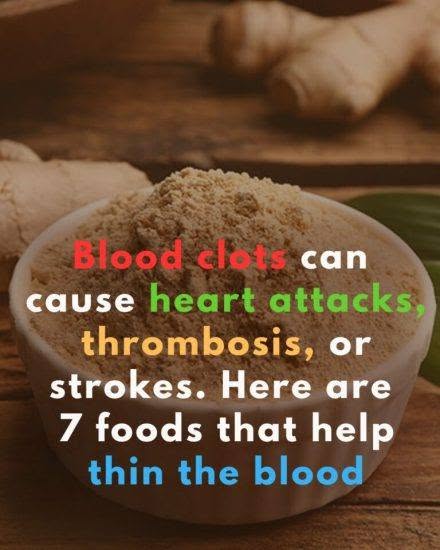
If you’re asking what the headline “7 powerful blood-thinning foods” really means, the phrase is somewhat misleading. Some foods contain compounds that can modestly affect platelet activity or blood clotting, but they are not substitutes for prescribed blood-thinning medication.
7 foods commonly discussed
- Garlic 🧄 — Garlic compounds can affect platelet aggregation, particularly at higher supplemental doses.
- Ginger — May have mild antiplatelet effects in laboratory and some human research.
- Turmeric — Curcumin has been studied for effects on platelet activity, but evidence isn’t strong enough to use it as a treatment for clots.
- Fatty fish 🐟 — Salmon, sardines and similar fish provide omega-3 fatty acids, which can have modest effects on platelet function.
- Cinnamon — Contains compounds that have been investigated for effects on clotting, but evidence in humans is limited.
- Green tea 🍵 — Contains compounds that may influence clotting; importantly, it can also interact with certain anticoagulants.
- Dark chocolate/cocoa — Cocoa flavanols may influence platelet function, although this doesn’t mean chocolate is a medical blood thinner.
⚠️ An important warning
If you’re taking warfarin, apixaban, rivaroxaban, dabigatran, clopidogrel, aspirin, or another blood-thinning medicine, don’t deliberately increase these foods or take concentrated supplements without discussing it with your clinician. Some foods and supplements can alter bleeding risk or medication effects.
And if you’re worried about a blood clot, food cannot dissolve an established clot. Symptoms such as sudden one-sided leg swelling/pain, coughing up blood, chest pain, or sudden shortness of breath require medical attention rather than a dietary remedy.