7 “Blood-Thinning Foods” — What You Should Actually Know
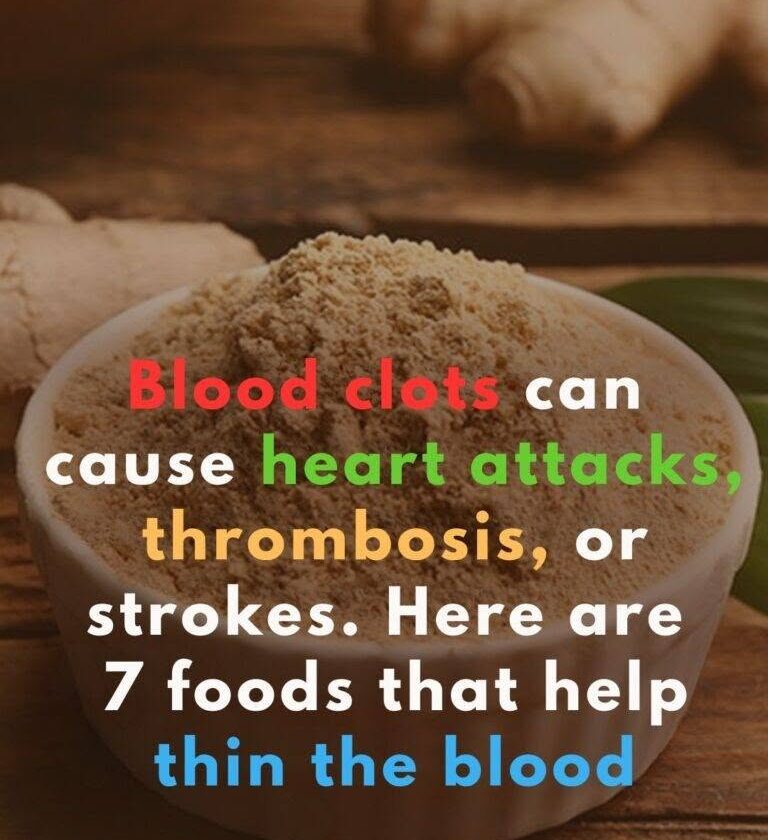
The phrase “blood-thinning foods” is misleading. Foods don’t work like anticoagulant medicines, and no food can safely dissolve an existing blood clot.
Some foods contain compounds that may influence cardiovascular health or platelet activity, but the effects are much weaker and less predictable than prescription blood thinners.
🥗 Foods commonly discussed
- Garlic — may have modest effects on platelet function, particularly in concentrated supplement form.
- Ginger — has been studied for effects on platelet aggregation, but it isn’t a substitute for anticoagulant treatment.
- Turmeric — contains curcumin, which has biological effects in laboratory studies, but evidence isn’t sufficient to use it as a blood thinner.
- Fatty fish — salmon, sardines and mackerel provide omega-3 fats that support cardiovascular health.
- Berries — provide polyphenols and fiber as part of a heart-healthy diet.
- Grapes — contain polyphenols such as resveratrol, although eating grapes isn’t equivalent to taking an anticoagulant.
- Leafy green vegetables — spinach, kale and broccoli are excellent nutritious foods, but they’re actually high in vitamin K, which can affect warfarin.
⚠️ Especially important if you take warfarin
You do not need to eliminate leafy greens. The key is keeping your vitamin-K intake reasonably consistent. Suddenly eating much more or much less can alter your INR and affect how warfarin works. (nhs.uk)
Some foods and drinks—including cranberry and grapefruit products—can also interact with warfarin, so discuss significant dietary changes with your anticoagulation team. (nhs.uk)
🚨 Don’t use food to treat a suspected clot
If you develop sudden one-sided leg swelling/pain, unexplained chest pain, sudden shortness of breath, or coughing up blood, don’t wait for a food or supplement to work. These can be signs of a potentially serious blood clot and require urgent medical assessment.
Bottom line: 🫀 Eat fish, vegetables, fruits, nuts and other whole foods for overall cardiovascular health—but don’t think of them as natural replacements for prescribed blood thinners. And if you’re taking warfarin or another anticoagulant, check before making major dietary or supplement changes.