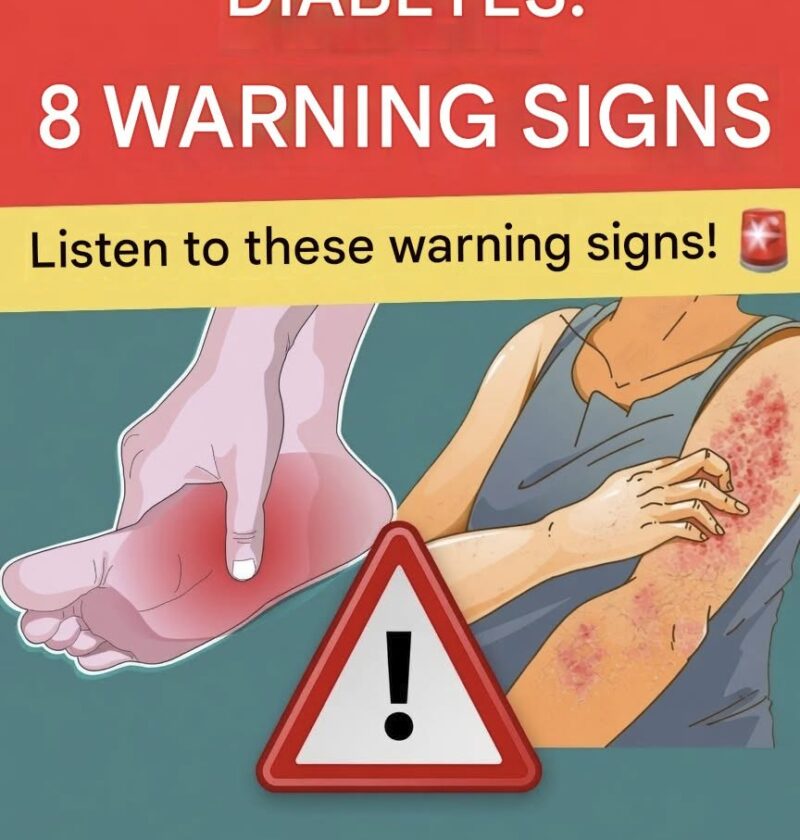
8 Signs of Diabetes: Don’t Ignore These Warning Signals
Diabetes can develop gradually, and type 2 diabetes may cause few or no noticeable symptoms for years. Recognizing possible warning signs can encourage timely testing and treatment. (CDC)
1. 💧 Unusual thirst
Feeling much thirstier than usual can occur when elevated blood glucose causes the body to lose more fluid through urine.
2. 🚽 Frequent urination
Needing to urinate more often—especially at night—can be a sign that excess glucose is being eliminated through the urine. (Mayo Clinic)
3. 🍽️ Increased hunger
Some people experience unusual or persistent hunger because their body cannot use glucose normally for energy.
4. ⚖️ Unexplained weight loss
Losing weight without changing your diet or exercise can occur, particularly when diabetes is developing rapidly. (CDC)
5. 😴 Persistent fatigue
High blood glucose can interfere with the body’s ability to use glucose efficiently for energy. Dehydration from frequent urination can add to tiredness.
6. 👁️ Blurred vision
Changes in blood glucose can temporarily affect the eye’s ability to focus, causing blurred vision. (CDC)
7. 🩹 Slow-healing cuts or frequent infections
Diabetes can be associated with wounds that heal slowly and recurring infections, including urinary, skin, and yeast infections. (NIDDK)
8. 🦶 Tingling or numbness
Persistent tingling, burning, or numbness in the hands or feet can occur with diabetes-related nerve damage, although this tends to be associated with diabetes that has been present for some time. (CDC Stacks)
🩺 Don’t wait for symptoms
Having one of these symptoms doesn’t mean you have diabetes—many other conditions can cause them. And importantly, some people with diabetes have no symptoms at all. A blood test such as A1C or fasting blood glucose is needed for diagnosis. (NIDDK)
If several of these signs are occurring together, particularly increased thirst, frequent urination, unexplained weight loss, or significant fatigue, arrange a medical evaluation rather than waiting for symptoms to become severe.
Bottom line: The earlier diabetes is detected, the sooner blood glucose can be managed and the risk of long-term complications reduced. (CDC)