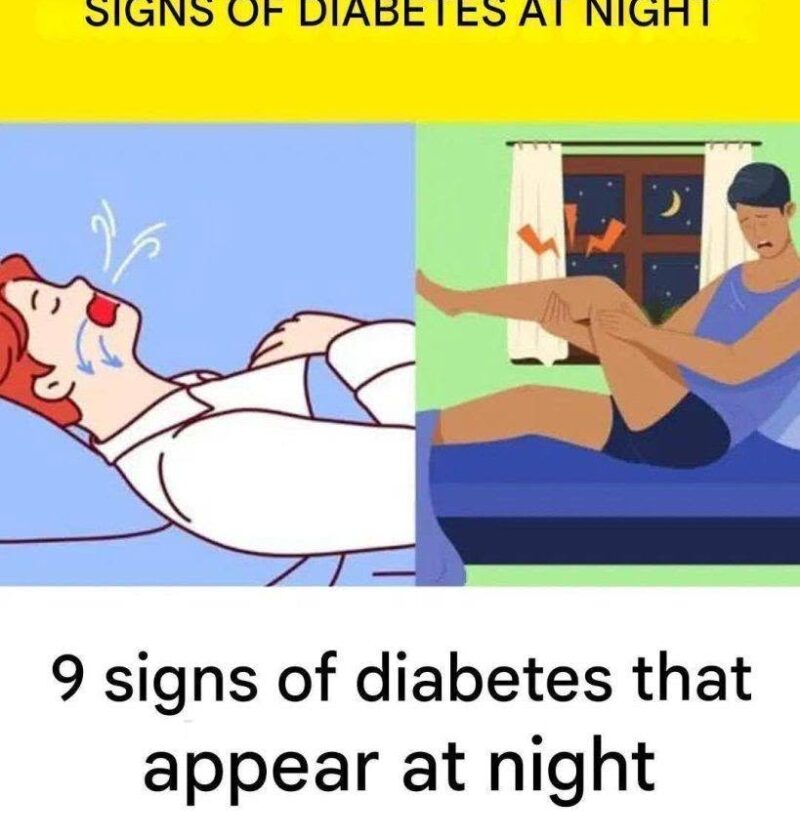
9 Signs of Diabetes That May Appear at Night
Diabetes can cause symptoms throughout the day, but some become more noticeable at night. These symptoms do not necessarily mean someone has diabetes, but they may warrant a medical evaluation, especially if they occur together or persist.
1. Frequent nighttime urination (nocturia)
High blood sugar can cause the kidneys to produce more urine, leading to multiple trips to the bathroom overnight.
2. Excessive thirst
Losing extra fluid through urination can leave you waking up thirsty or with a dry mouth.
3. Night sweats
People taking insulin or certain diabetes medications may experience low blood sugar (hypoglycemia) during sleep, which can cause heavy sweating.
4. Tingling, burning, or numbness in the feet
Diabetes-related nerve damage (peripheral neuropathy) often becomes more noticeable at night when there are fewer distractions.
5. Leg cramps
Some people with diabetes experience nighttime muscle cramps, although these can have many other causes as well.
6. Restless sleep
Frequent awakenings due to thirst, urination, discomfort, or changes in blood sugar can lead to poor-quality sleep.
7. Dry mouth
High blood sugar and dehydration can contribute to waking with a dry mouth.
8. Increased hunger
If blood sugar drops too low overnight, some people wake up feeling very hungry, especially if they use insulin or medications that lower blood sugar.
9. Morning headaches or unusual fatigue
Poor sleep, nighttime low blood sugar, or conditions that commonly occur alongside diabetes—such as sleep apnea—can contribute to waking up with headaches or feeling unrefreshed.
Other common signs of diabetes
Symptoms that may occur during the day include:
- Increased thirst
- Frequent urination
- Unexplained weight loss
- Blurred vision
- Slow-healing cuts or sores
- Frequent infections
- Persistent fatigue
When to seek medical advice
Consider seeing a healthcare professional if you have:
- Persistent excessive thirst and frequent urination
- Unexplained weight loss
- Recurrent infections
- Ongoing numbness or burning in your feet
- Symptoms that interfere with sleep or daily life