9 “Silent Signs” Your Neck Arteries May Be Narrowed
The headline needs an important correction: carotid artery disease is often genuinely silent. There isn’t a reliable set of nine symptoms that proves your neck arteries are blocked. Many people don’t know they have carotid disease until they experience a TIA or stroke. (NHLBI, NIH)
Possible warning signs of reduced blood flow to the brain include:
- Sudden weakness or numbness on one side of the body
- Sudden facial drooping
- Sudden trouble speaking
- Difficulty understanding speech
- Sudden loss or blurring of vision, particularly in one eye
- Sudden dizziness or loss of balance
- Sudden difficulty walking or coordinating movements
- Sudden severe headache with no obvious cause
- Brief episodes of the above symptoms that completely disappear — potentially a TIA (“warning stroke”) (www.stroke.org)
🚨 #5 isn’t something to “watch and wait”
If you suddenly lose or significantly change vision in one or both eyes, especially together with weakness, numbness, speech problems or dizziness, seek emergency medical attention immediately—even if the symptom disappears. A TIA can be a warning of a future stroke. (www.stroke.org)
The important catch
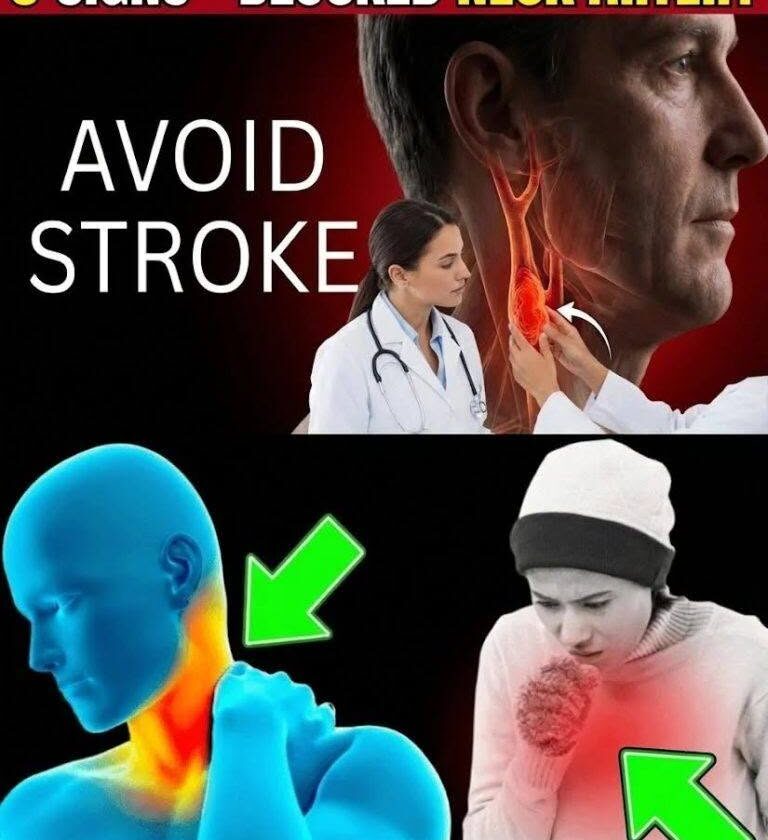
A carotid bruit—a whooshing sound a healthcare professional may hear with a stethoscope over the neck—can sometimes suggest abnormal blood flow, but it doesn’t by itself diagnose a blockage. Imaging such as carotid ultrasound may be needed when clinically appropriate. (NHLBI, NIH)
Bottom line: You can’t reliably diagnose “blocked neck arteries” from symptoms alone. Because carotid disease can remain silent, managing blood pressure, cholesterol, diabetes and smoking and getting appropriate medical evaluation when risk factors are present are much more useful than looking for a magic list of symptoms.