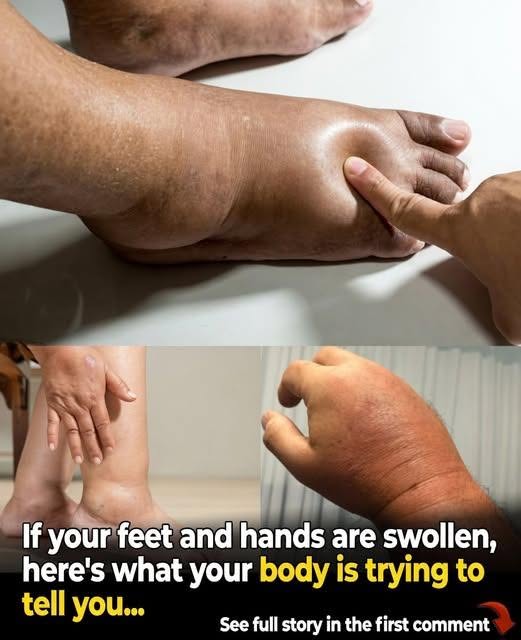
Swollen hands and feet (often due to edema, or fluid buildup) can happen for many reasons. Sometimes it’s temporary and harmless; other times it can signal an underlying medical condition that needs attention.
Common causes
1. Standing or sitting for long periods
- Fluid can pool in the hands, feet, and ankles.
- Often improves with movement and elevation.
2. Hot weather
- Blood vessels expand in the heat, making swelling more noticeable.
3. High salt intake
- Excess sodium can cause the body to retain water.
4. Pregnancy
- Mild swelling is common, especially later in pregnancy.
- Sudden or severe swelling should be evaluated promptly.
5. Certain medications
Some medicines can contribute to swelling, including:
- Blood pressure medications
- Certain anti-inflammatory drugs
- Some diabetes medications
Medical conditions that can cause swelling
Heart problems
Heart failure
- Can lead to fluid accumulation in the legs, feet, and sometimes hands.
Kidney disease
Chronic kidney disease
- Kidneys may struggle to regulate fluid and salt balance.
Liver disease
Cirrhosis
- Can contribute to swelling in the legs and abdomen.
Thyroid disorders
Hypothyroidism
- May cause puffiness and swelling.
Problems with veins or lymphatic drainage
- Poor circulation
- Chronic venous insufficiency
- Lymphedema
Hidden dangers: when swelling may be serious
Seek prompt medical attention if swelling is accompanied by:
- Shortness of breath
- Chest pain
- Sudden, severe swelling
- Swelling in only one leg with pain, warmth, or redness
- Significant swelling during pregnancy with headache or vision changes
These can sometimes indicate conditions such as:
- Deep vein thrombosis
- Heart-related problems
- Pregnancy complications
What can help mild swelling?
- Elevate your feet when resting
- Move regularly if sitting for long periods
- Reduce excessive salt intake
- Stay hydrated
- Wear compression garments if recommended by a healthcare professional
Bottom line
Swollen hands and feet are often caused by everyday factors such as heat, prolonged sitting, or excess salt. However, persistent, worsening, or unexplained swelling can sometimes be a sign of heart, kidney, liver, thyroid, or circulation problems and deserves medical evaluation.