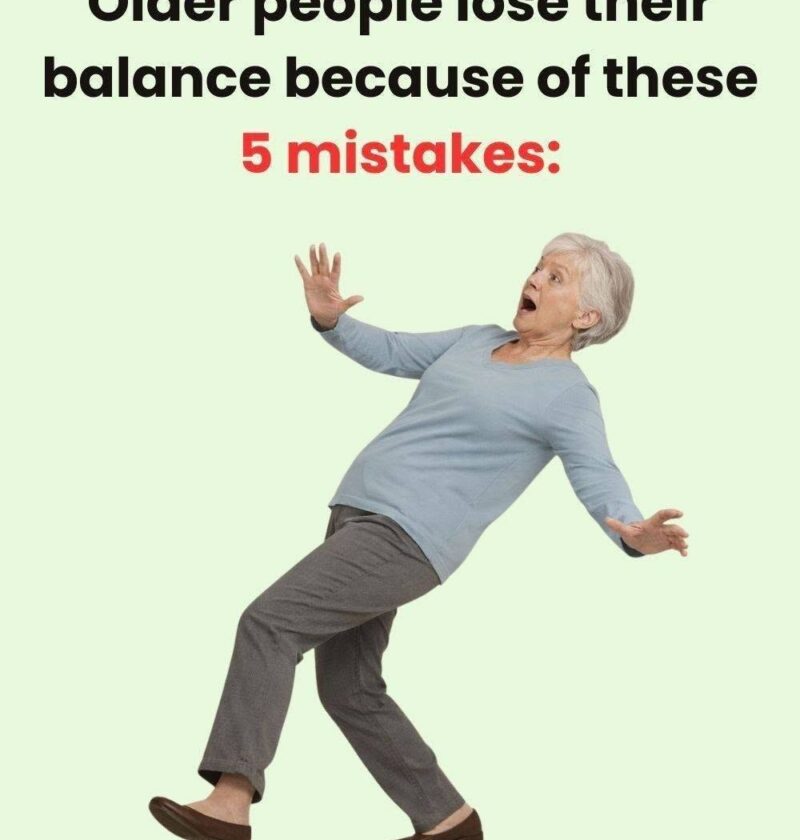
Balance problems become more common with age, but losing balance is not simply an unavoidable part of getting older. Several everyday habits and health issues can increase fall risk. (CDC)
⚠️ Common mistakes that can affect balance
- Being too inactive
Avoiding activity can weaken the legs and reduce balance. Strength and balance exercises, including appropriately supervised programs such as Tai Chi, can help. (CDC) - Ignoring medication side effects
Some medicines can cause dizziness, sleepiness, blurred vision, or blood-pressure changes. Older adults should periodically have their medications reviewed by a doctor or pharmacist. Don’t stop prescribed medicines on your own. (CDC Stacks) - Not checking vision
Poor vision can make obstacles, steps, and changes in floor level harder to detect. Regular eye examinations and appropriate glasses can reduce this risk. (CDC) - Wearing unsafe footwear
Loose slippers, poorly fitting shoes, or footwear with inadequate traction can make walking less stable. Proper fit and good traction are important. (CDC) - Leaving trip hazards around the home
Loose rugs, electrical cords, clutter, slippery bathroom floors, and inadequate lighting can turn an ordinary home into a fall hazard. (CDC) - Standing up too quickly
Some older adults experience a sudden drop in blood pressure when moving from sitting or lying to standing. Getting up slowly and allowing yourself time to stabilize can help. - Ignoring repeated dizziness or falls
Recurrent unsteadiness deserves evaluation rather than simply being blamed on age. Doctors can assess gait, strength, medications, vision, blood pressure, and other possible causes. (CDC)
🦵 What helps most?
A useful approach is regular strength and balance training + medication review + vision care + safer footwear + a safer home. Exercise programs that improve strength and balance have been shown to reduce falls. (CDC)
Seek urgent medical attention for sudden loss of balance accompanied by facial drooping, one-sided weakness/numbness, speech difficulty, severe dizziness, or sudden vision changes, because these can be signs of a stroke.