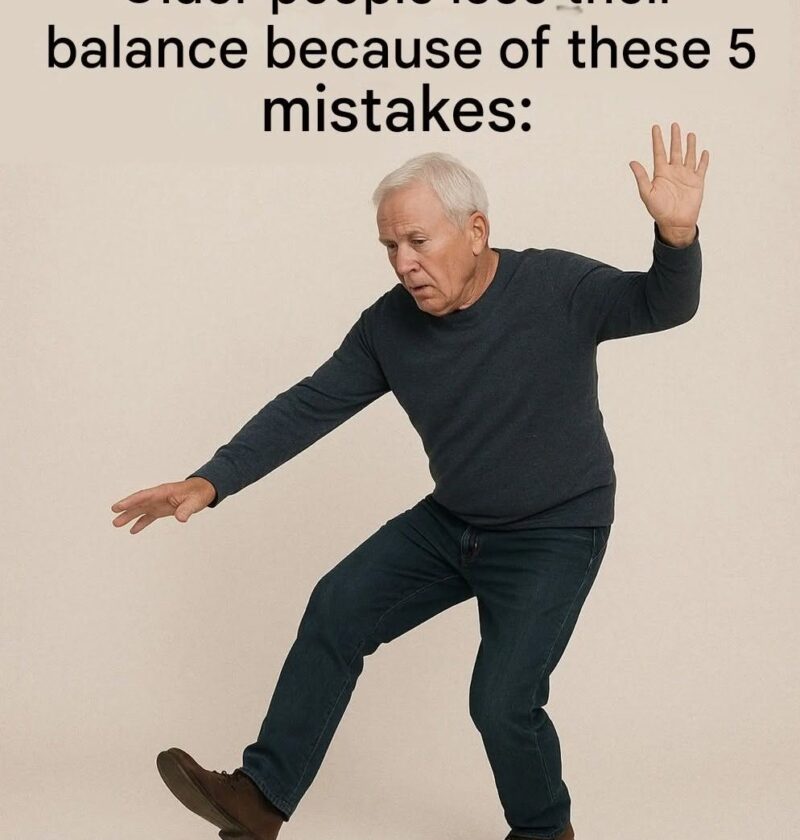
5 Common Mistakes That Can Cause Older People to Lose Their Balance
Balance naturally can become more challenging with age, but some everyday habits can increase the risk of dizziness, falls, and loss of stability.
1. 🪑 Sitting for most of the day
Too little physical activity can weaken the legs and core and reduce balance and coordination. Regular walking and strength or balance exercises can help maintain stability.
2. 👟 Wearing unsafe footwear
Loose slippers, smooth socks, worn-out soles, or poorly fitting shoes can make slipping or tripping more likely. Supportive, well-fitting shoes with good traction are safer.
3. 💊 Ignoring medication side effects
Some medicines can cause dizziness, drowsiness, low blood pressure, or impaired coordination. Don’t stop prescribed medication yourself—ask a doctor or pharmacist to review your medicines if balance problems have started.
4. 💧 Not drinking enough fluids
Dehydration can contribute to weakness, dizziness, and low blood pressure, particularly during hot weather or illness. Maintain adequate fluid intake unless a healthcare professional has told you to restrict fluids.
5. 🏠 Leaving fall hazards around the home
Loose rugs, clutter, poor lighting, electrical cords, and slippery bathroom surfaces can turn a minor stumble into a serious fall. Keep walkways clear and consider grab bars or nonslip surfaces where appropriate.
🚨 Don’t assume new balance problems are “just aging”
Sudden loss of balance, especially with facial drooping, weakness or numbness on one side, trouble speaking, vision changes, or a severe headache, can be a sign of a stroke and requires emergency medical attention.
If an older adult has new, persistent, or worsening balance problems, they should be evaluated by a healthcare professional to look for treatable causes.