Here’s a medically accurate version that keeps the strong headline while avoiding the misleading idea that everyone gets a warning exactly one month beforehand. Some people do have warning symptoms hours, days, or even weeks before a heart attack, while others have little or no warning. (Mayo Clinic)
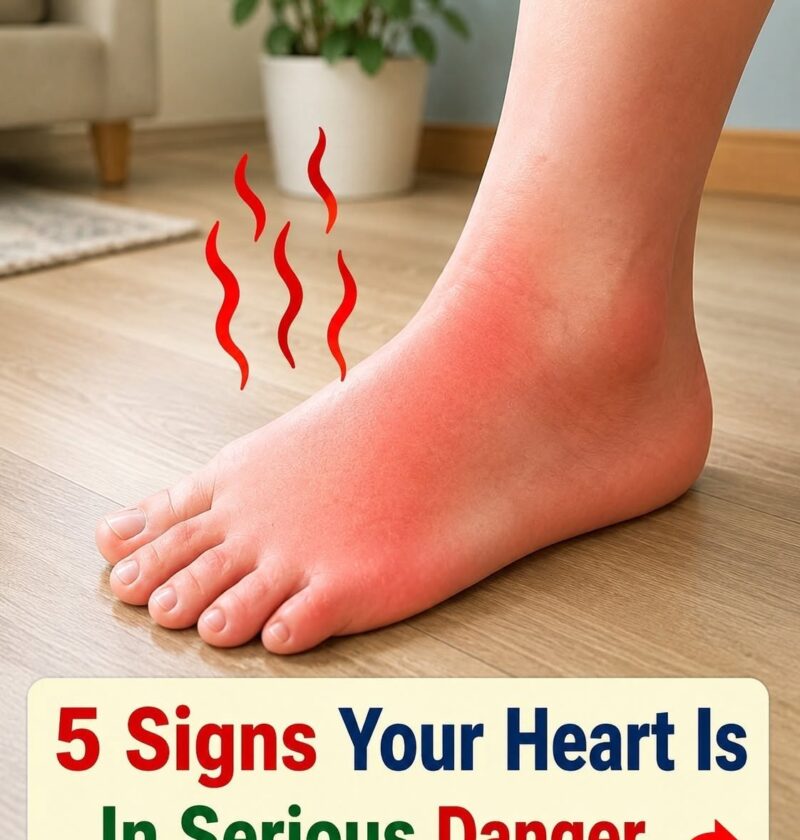
❤️ 5 WARNING SIGNS YOUR HEART MAY BE IN TROUBLE — AND THEY CAN SOMETIMES APPEAR WEEKS BEFORE A HEART ATTACK
A heart attack doesn’t always begin with dramatic chest pain.
Some people experience warning symptoms hours, days, or weeks beforehand. But there is no reliable “one-month warning” that happens to everyone.
🚨 1. Unusual or worsening chest pressure
Pressure, squeezing, tightness, fullness, or discomfort in the center of the chest—especially if it repeatedly occurs with activity—can be a warning sign of reduced blood flow to the heart. (www.heart.org)
😮💨 2. Shortness of breath
Unexplained breathlessness, particularly during activities that normally don’t leave you short of breath, can be a heart-related warning sign. It can occur with or without chest discomfort. (Mayo Clinic)
😴 3. Unusual or persistent fatigue
Feeling much more tired than usual can sometimes accompany heart problems. In women especially, unusual tiredness or weakness may occur with a heart attack. (www.heart.org)
🤢 4. Nausea, indigestion, or cold sweats
A heart attack doesn’t always feel like “heart pain.” Nausea, indigestion-like discomfort, vomiting, or breaking out in a cold sweat can occur, particularly when combined with other symptoms. (Mayo Clinic)
💢 5. Pain spreading beyond the chest
Discomfort may travel to the arm, shoulder, back, neck, jaw, or upper abdomen. Some people—especially women, older adults, and people with diabetes—may have less typical symptoms. (Mayo Clinic)
🚑 DON’T WAIT FOR THE “PERFECT” SYMPTOM
If you develop new or unexplained chest discomfort, severe shortness of breath, fainting, or symptoms that make you think you could be having a heart attack, seek emergency medical help immediately. Don’t wait to see whether the symptoms disappear. (Mayo Clinic)
Knowing the warning signs can save time—and when it comes to a heart attack, time matters.