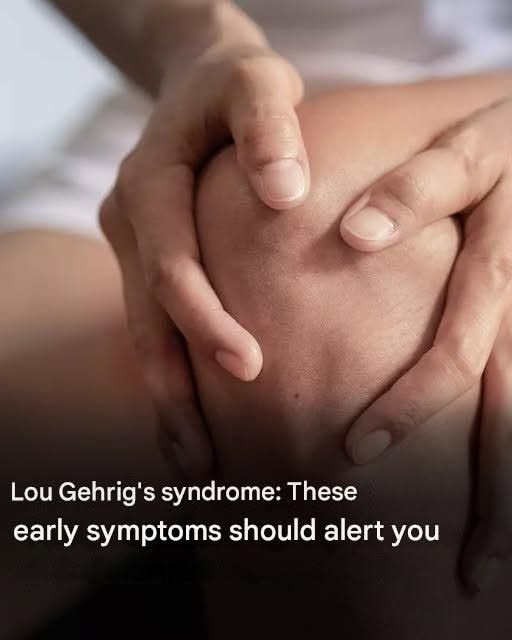
“Lou Gehrig’s syndrome” is the older name for Amyotrophic Lateral Sclerosis (ALS), a progressive disease that affects nerve cells controlling voluntary muscles.Headlines like “here are the first symptoms” are often oversimplified, because ALS does not start the same way in everyone, and early signs can be subtle and easily confused with other conditions.
Early symptoms of ALS (what doctors actually look for)
1. Muscle weakness (most common early sign)
- Trouble lifting objects
- Weak grip (dropping things)
- Difficulty climbing stairs or walking normally
- Often starts in one hand, arm, or leg
2. Muscle twitching (fasciculations)
- Small, visible twitching under the skin
- Common in arms, shoulders, or tongue
- Important: twitching alone is not ALS (very common in benign conditions)
3. Muscle cramps and stiffness
- Cramping in hands or legs
- Feeling of tight or stiff muscles
4. Slurred speech or voice changes
- Speech becomes slower or unclear
- Voice may sound nasal or strained
5. Difficulty with fine motor tasks
- Buttoning clothes
- Writing changes
- Using utensils becomes harder
Less common early signs
- Tripping or dragging a foot
- Mild swallowing difficulty
- Unexplained fatigue in specific muscles
Important reality check
Early ALS symptoms are often:
- Subtle
- Asymmetric (one side first)
- Progressive over months
But many similar symptoms are far more commonly caused by:
- Nerve irritation or compression
- Vitamin deficiencies (like B12)
- Anxiety or stress-related muscle twitching
- Thyroid issues
- Benign fasciculation syndrome
When doctors take it more seriously
Neurologists look for:
- Progressive weakness (not just twitching)
- Clear loss of muscle function over time
- Combined upper and lower motor neuron signs on exam
- Confirmed findings on EMG testing
Bottom line
Amyotrophic Lateral Sclerosis usually starts with gradual, progressive muscle weakness, not sudden symptoms or twitching alone. Online “first symptom lists” often exaggerate or blur distinctions with much more common conditions.
If you want, I can help you compare ALS symptoms with more common causes of twitching or weakness so you can tell what actually needs medical attention and what usually doesn’t.