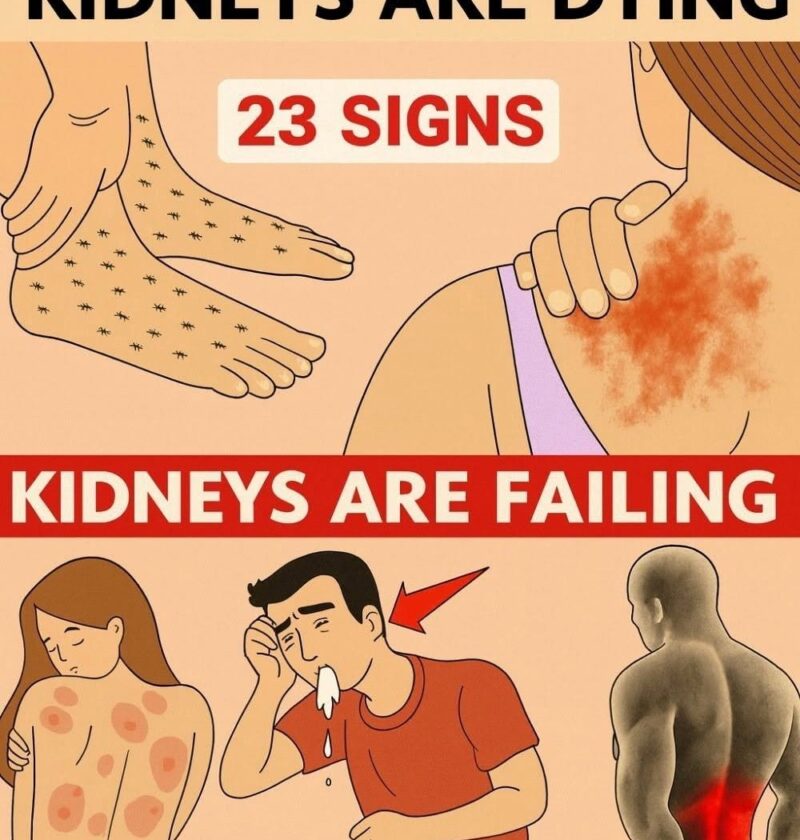
Here’s a medically responsible version that keeps the curiosity-driven headline but makes an important point: kidney disease often causes no symptoms in its early stages, so symptoms alone cannot diagnose it. (National Kidney Foundation)
🫘 23 STRANGE SIGNS YOUR KIDNEYS MIGHT BE IN TROUBLE
Your kidneys work quietly every day to filter waste, balance fluids and minerals, and help regulate several important processes in your body.
The surprising part? Kidney disease can develop with few or no symptoms at first. When symptoms do appear, they can sometimes seem unrelated to your kidneys.
⚠️ 23 possible warning signs
- Foamy or unusually bubbly urine
- Blood or pink/cola-colored urine
- Needing to urinate more often
- Waking frequently at night to urinate
- Urinating much less than usual
- Painful or difficult urination
- Swelling around the eyes
- Swollen ankles or feet
- Swelling in the hands or face
- Persistent fatigue or weakness
- Trouble concentrating or “brain fog”
- Poor appetite
- Nausea
- Vomiting
- Unexplained weight loss
- Dry, persistently itchy skin
- Muscle cramps, especially at night
- Trouble sleeping
- Shortness of breath
- Changes in thirst
- A metallic or unusual taste in the mouth
- Urine-like or ammonia-like breath odor
- High blood pressure
Many of these symptoms can have causes other than kidney disease, so having one doesn’t mean your kidneys are failing. (National Kidney Foundation)
🩺 THE IMPORTANT PART
Don’t wait for symptoms if you’re at higher risk.
Diabetes, high blood pressure, heart disease, obesity, and a family history of kidney disease can increase your risk. Kidney health can often be checked with simple blood and urine tests, including eGFR and urine albumin testing. (National Kidney Foundation)
🚨 Seek urgent medical care for severe shortness of breath, very little or no urine, severe swelling, confusion, or other rapidly worsening symptoms.
Your kidneys can be in trouble without giving you obvious warning signs—which is why testing matters.