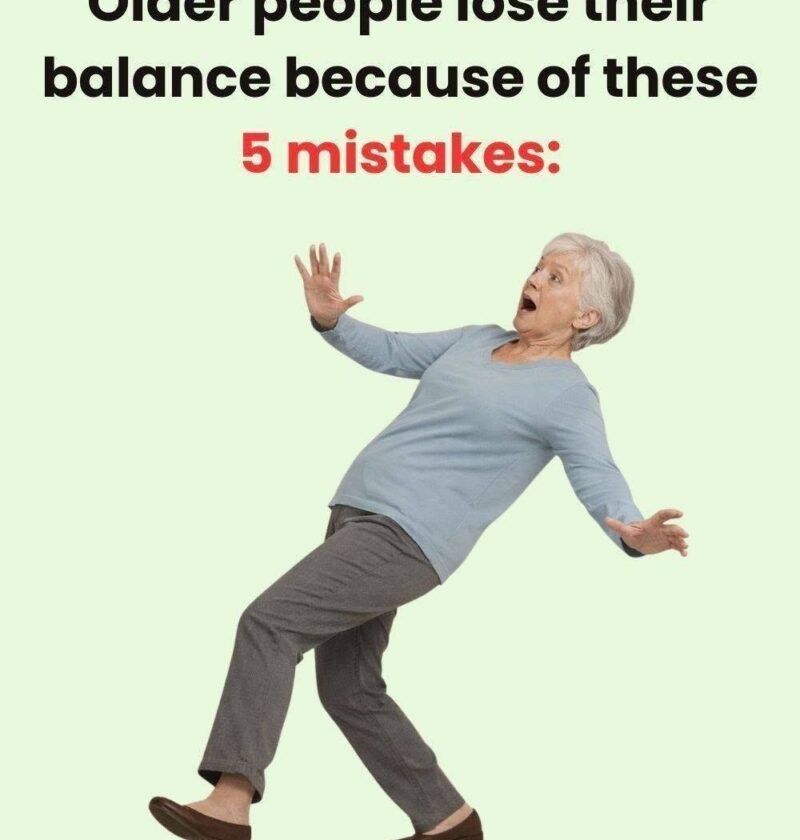
Here’s a medically grounded version that focuses on modifiable balance and fall-risk mistakes, rather than suggesting that balance problems are simply an unavoidable part of aging. (CDC)
⚠️ COMMON MISTAKES THAT CAN AFFECT BALANCE IN OLDER ADULTS
Feeling unsteady isn’t something you should simply accept as “part of getting older.” Balance problems can have several causes, and many fall risks can be reduced. (CDC)
1. 🛋️ Staying too inactive
Avoiding movement because of fear of falling can lead to weaker muscles and poorer mobility. Strength and balance exercises can help maintain stability.
2. 💊 Ignoring medication side effects
Some prescription and over-the-counter medicines can cause dizziness, sleepiness, or weakness. Ask your doctor or pharmacist to review your medications—but never stop a prescribed medicine on your own. (CDC)
3. 👓 Putting off eye exams
Poor vision can make it harder to detect obstacles and judge your surroundings. Regular eye examinations and updated prescriptions can help. (CDC)
4. 👟 Wearing unsafe footwear
Loose, poorly fitting, backless, or slippery footwear can make walking less stable. Choose sturdy shoes that fit properly and have good traction. (CDC)
5. 🏠 Ignoring hazards at home
Loose rugs, clutter, poor lighting, uneven steps, and slippery floors can turn ordinary movement into a fall risk. Remove obstacles and improve lighting where needed. (CDC)
6. 💧 Getting dehydrated
Not drinking enough can contribute to dizziness in some people, particularly when combined with certain illnesses or medications. Maintaining adequate fluid intake is important unless your healthcare professional has given you fluid restrictions.
7. 🩺 Ignoring repeated dizziness or unsteadiness
Balance problems can sometimes be related to blood-pressure changes, vision problems, nerve or foot problems, muscle weakness, or other medical conditions. Repeated symptoms deserve medical evaluation. (National Institute on Aging)
🧘 WHAT CAN HELP?
Regular strength and balance exercises, such as appropriately supervised balance training or tai chi, can help improve stability. A healthcare professional can also assess your individual fall risk. (CDC)
🚨 If balance suddenly becomes much worse, or you develop weakness, trouble speaking, severe dizziness, or other sudden neurological symptoms, seek urgent medical care.
Falls aren’t inevitable with age. Small changes can make a big difference in staying steady and independent.