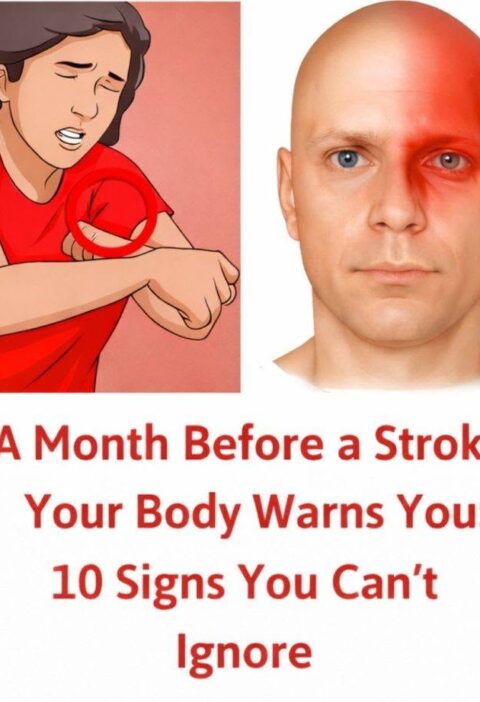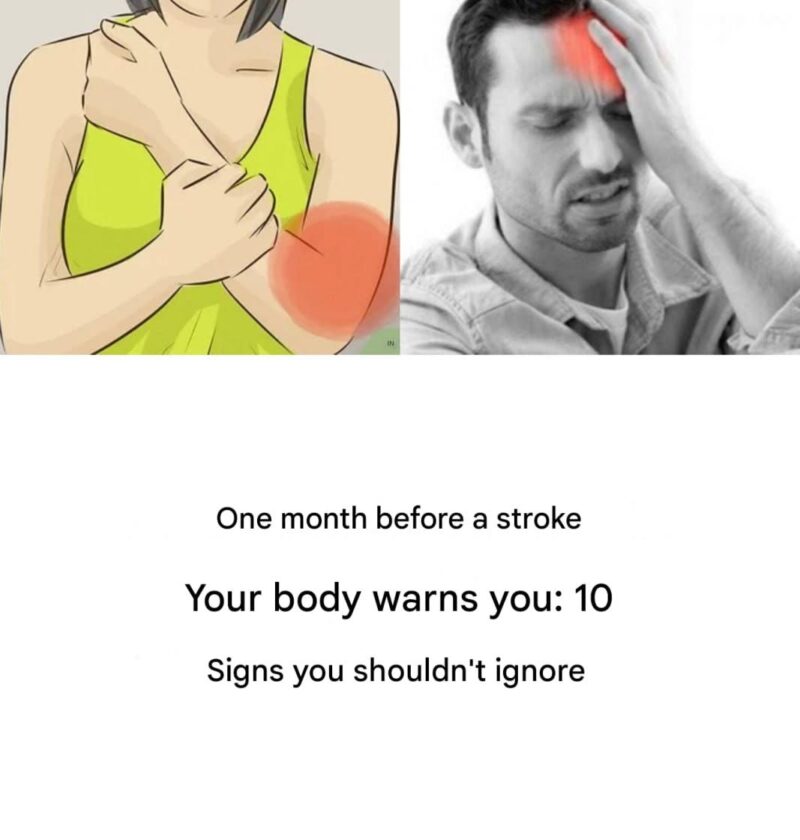
The “one month before a stroke” claim is misleading—there isn’t a reliable set of symptoms that predicts a stroke exactly one month in advance. A TIA (warning stroke) can occur before a major stroke, but its symptoms are sudden and require urgent evaluation. (www.stroke.org)
🚨 Your Body May Warn You Before a Stroke—10 Signs You Should Never Ignore
There is no reliable countdown of “one month before a stroke.” However, some symptoms can signal a TIA (“warning stroke”) or an increased risk of stroke.
Watch for these warning signs:
- 🙂 Sudden facial drooping
One side of the face becomes weak or numb. - 💪 Sudden weakness or numbness
Especially in one arm or leg, particularly on one side. - 🗣️ Sudden speech difficulty
Slurred speech, trouble speaking, or difficulty understanding others. - 👁️ Sudden vision changes
Blurred, double, or lost vision in one or both eyes. - 🚶 Sudden loss of balance
Unexpected dizziness, trouble walking, or loss of coordination. - 🤕 Sudden severe headache
Especially a severe headache with no known cause. - 🧠 Sudden confusion
A person may suddenly have difficulty understanding or responding appropriately. - ⚡ Brief stroke-like episodes
Symptoms that disappear after a few minutes can still be a TIA and shouldn’t be dismissed. - ❤️ Uncontrolled high blood pressure
High blood pressure is one of the major risk factors for stroke and often has no noticeable symptoms. - 💓 Irregular heartbeat or atrial fibrillation
AFib can increase the risk of blood clots and stroke and should be medically evaluated.
⏰ The most important message
Don’t wait for a warning sign to become permanent.
Remember B.E. F.A.S.T.:
B — Balance loss
E — Eye/vision changes
F — Face drooping
A — Arm weakness
S — Speech difficulty
T — Time to call emergency services
If these symptoms appear suddenly—even if they disappear—seek emergency medical attention immediately. A TIA can be a warning of a future stroke. (www.stroke.org)
❤️ Stroke prevention starts before an emergency: manage blood pressure, diabetes and cholesterol, don’t smoke, stay physically active, and follow your healthcare professional’s treatment plan. (www.stroke.org)