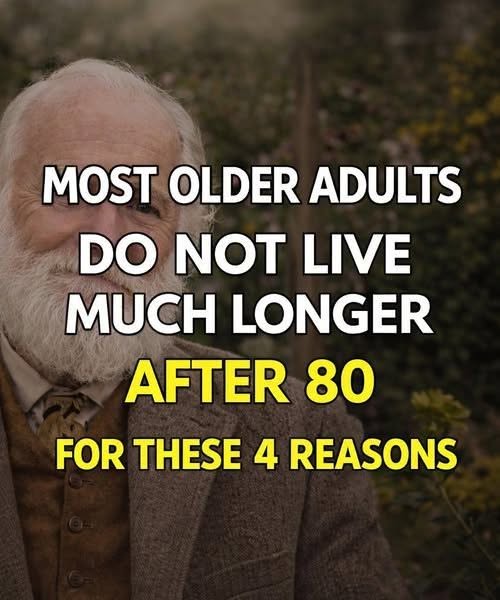
If you’re asking whether the headline “Most older adults don’t live much past 80: Here are 4 reasons” is true, it’s misleading.
There is no biological rule that people generally stop living shortly after 80. Worldwide, life expectancy at birth was about 73.3 years in 2024, but that figure includes deaths at younger ages and is not the same as the expected remaining lifespan of someone who has already reached 80. The number of people aged 80+ is actually projected to increase substantially worldwide. (World Health Organization)
Four major factors that can shorten life in older age
- Heart and blood-vessel disease
Cardiovascular disease remains a major cause of death, and risk generally increases with age. - Cancer and other chronic diseases
Aging increases the likelihood of conditions such as cancer, diabetes, COPD and other chronic illnesses. Older adults also commonly have several conditions simultaneously. (World Health Organization) - Frailty, falls and loss of physical capacity
Reduced strength, balance and mobility can make falls and other complications more dangerous. WHO identifies frailty and falls among important geriatric syndromes. (World Health Organization) - Lifestyle and social circumstances
Tobacco use, poor diet, physical inactivity, excessive alcohol use, social isolation, poverty and limited access to healthcare can all affect healthy aging and longevity. (World Health Organization)
The encouraging part: reaching 80 does not mean a person is destined to decline rapidly. WHO specifically notes that there is no “typical” 80-year-old—some people at 80 have physical and mental capacities comparable to much younger adults. (World Health Organization)
So I would treat the headline as clickbait rather than a medical fact. The more useful question is not “Why do people die after 80?” but “What factors help people remain healthy and independent into their 80s and beyond?”