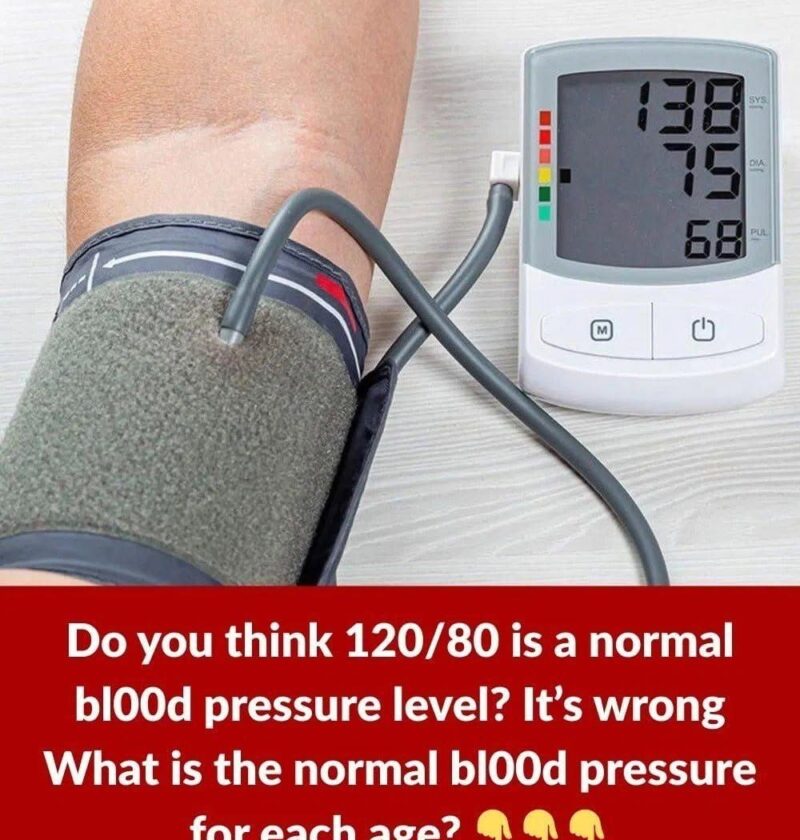
There isn’t a separate “normal” blood-pressure number for every age in adults. Current guidelines use the same adult categories across age groups. (professional.heart.org)
❤️ What Is the Normal Blood Pressure for Each Age?
Many people believe blood pressure is supposed to rise naturally as you get older. While blood pressure often increases with age, that doesn’t mean a higher reading is automatically healthy or normal.
For adults, current guidelines define normal blood pressure as below 120/80 mmHg. (professional.heart.org)
📊 Blood Pressure Guide for Adults
18–39 years:
✅ Normal: below 120/80
⚠️ Elevated: 120–129 and below 80
🚨 High: 130/80 or higher
40–59 years:
✅ Normal: below 120/80
⚠️ Elevated: 120–129 and below 80
🚨 High: 130/80 or higher
60–79 years:
✅ Normal: below 120/80
⚠️ Elevated: 120–129 and below 80
🚨 High: 130/80 or higher
80+ years:
There is no universal “normal” number simply because of age. Blood-pressure goals may need to be individualized based on overall health, other medical conditions, medications, and the person’s circumstances.
🩺 What Do the Numbers Mean?
Normal: less than 120/80
Elevated: systolic 120–129 and diastolic below 80
Stage 1 hypertension: systolic 130–139 or diastolic 80–89
Stage 2 hypertension: systolic 140 or higher or diastolic 90 or higher. (professional.heart.org)
⚠️ One Reading Doesn’t Tell the Whole Story
Blood pressure changes throughout the day. Stress, exercise, caffeine, illness, and even how you sit while measuring it can affect the result.
For a more accurate reading, sit quietly with your back supported, feet flat on the floor, and your arm supported at heart level. Take repeated measurements rather than relying on a single number. (www.heart.org)
🚨 When Is It an Emergency?
A reading above 180/120 mmHg is severely high. If it occurs with symptoms such as chest pain, shortness of breath, weakness or numbness, vision changes, back pain, or difficulty speaking, seek emergency medical care immediately. (www.heart.org)
❤️ The goal isn’t to have a different “normal” blood pressure simply because you’re older. Know your numbers, measure correctly, and discuss consistently abnormal readings with a healthcare professional.