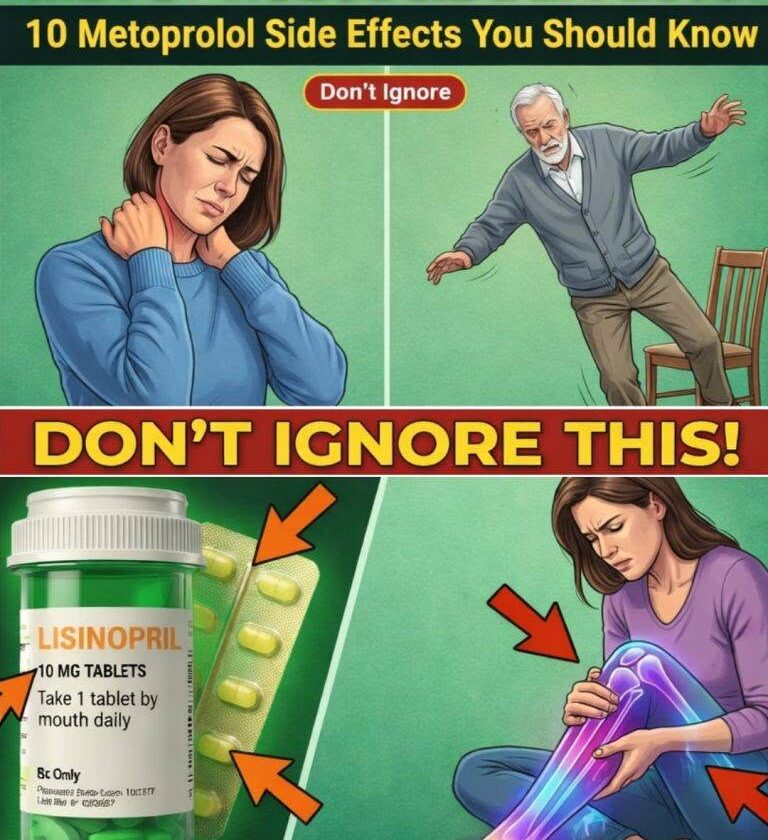
If you’re looking for a detailed, medically accurate explanation of “10 metoprolol side effects that are often overlooked,” the key is to distinguish common effects from rare but important ones. Metoprolol is a beta-blocker used for conditions such as high blood pressure, abnormal heart rhythms, angina, and some heart conditions. (nhs.uk)
💊 10 possible side effects
- Tiredness or weakness — one of the more common effects, particularly when starting treatment.
- Dizziness or light-headedness — can occur because metoprolol lowers heart rate and blood pressure.
- Cold hands and feet — reduced peripheral circulation can make the extremities feel cold.
- Headache — commonly reported and often improves as the body adjusts.
- Nausea or stomach discomfort — digestive symptoms can occur.
- Diarrhea or vomiting — less common but recognized effects.
- Sleep or sexual problems — some people report sleep disturbances or reduced sexual function; the NHS notes that evidence linking metoprolol specifically to sexual problems is not definitive. (nhs.uk)
- Slow heart rate — because slowing the heart is part of how metoprolol works, an excessively slow rate can sometimes cause weakness, dizziness or fainting.
- Breathing problems — uncommon, but wheezing or shortness of breath requires medical attention, particularly in people with asthma or other lung disease. (nhs.uk)
- Heart problems or very low blood pressure — rarely, excessive effects can cause significant weakness, fainting, worsening heart-failure symptoms, or an abnormal heartbeat. (nhs.uk)
⚠️ One of the most important “overlooked” points
Don’t stop metoprolol suddenly. Abrupt discontinuation can cause the underlying heart condition to worsen and can lead to increased heart rate, blood pressure, chest pain, or other serious problems. If it needs to be stopped, your prescriber should generally guide the dose reduction. (nhs.uk)
🚨 Get medical help promptly if you develop
- New or worsening shortness of breath
- Fainting or severe dizziness
- Significant swelling of the legs or ankles
- A very slow or irregular heartbeat
- New or worsening chest pain
- Signs of a serious allergic reaction
These aren’t necessarily caused by metoprolol, but they warrant medical assessment. (nhs.uk)
Bottom line: Metoprolol is generally well tolerated, and many side effects are mild and improve with time. The “hidden dangers” framing is misleading—what matters is recognizing potentially serious symptoms and never changing the dose or stopping the medicine without medical guidance. (nhs.uk)