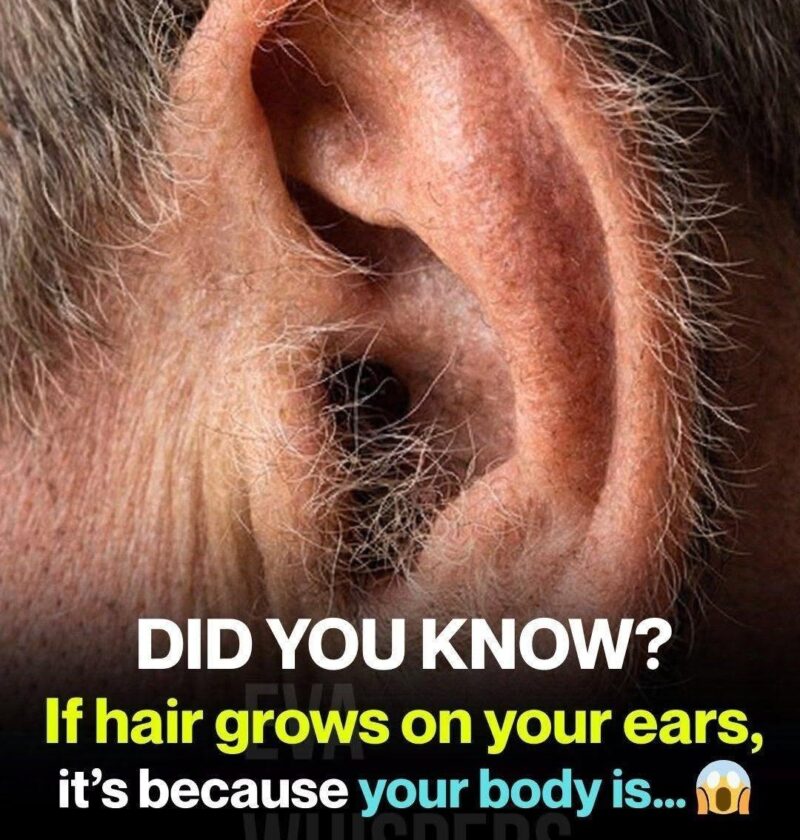
👂 “If Hair Grows on Your Ears, It Means Your Body Is…” — What Does It Really Mean?
The viral claim usually suggests that ear hair is a sign of excess testosterone, aging, or a hidden health problem. That’s not quite right.
What causes ear hair?
Ear hair is usually normal, particularly as people get older. In men, ear hair may become more noticeable with age, possibly because hair follicles become more sensitive to androgens such as testosterone. Genetics also play a role. (Cleveland Clinic)
🧬 Is it a sign of high testosterone?
Not necessarily. Having visible hair around the outer ear doesn’t by itself mean you have abnormally high testosterone or another hormonal problem.
For most people, it’s simply a normal variation in hair growth.
When should you pay attention?
If you develop rapid or unusually extensive new hair growth, especially along with other hormonal changes, it’s worth discussing with a healthcare professional. Excess coarse hair in women, for example, can sometimes be associated with elevated androgen levels or conditions such as PCOS. (Mayo Clinic)
✂️ Can you remove it?
Yes. If it’s bothering you cosmetically, carefully trimming or shaving the hair on the outer ear is generally an option. Avoid putting sharp objects deep inside the ear canal. Ear hair also serves some protective function by helping trap debris. (Cleveland Clinic)
Bottom line: Ear hair is usually a normal combination of genetics, aging and hormone sensitivity—not a warning that something is wrong with your body.